
Saffron Market Size – Industry Structure Evaluation, Demand Drivers Analysis, Regional Growth Analysis and Identification, Competitive Positioning Review & Global Market Size Forecast to 2032
Overview
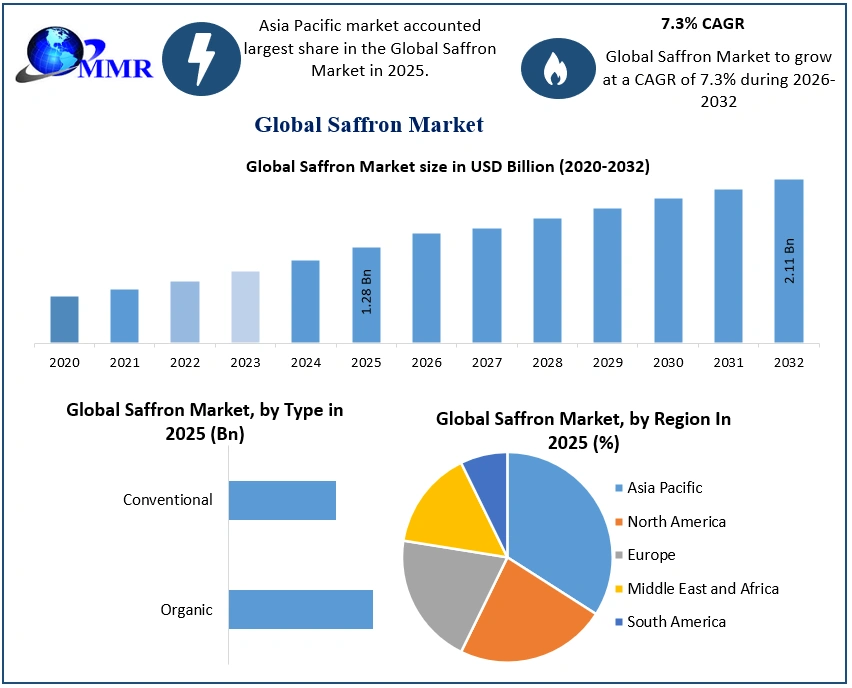
The Saffron Market size was valued at USD 1.28 Billion in 2025 and the total Saffron revenue is expected to grow at a CAGR of 7.3% from 2025 to 2032, reaching nearly USD 2.11 Billion by 2032.
Saffron Market Overview
Saffron, known as Crocus sativus, is a spice derived from the flowers of the Crocus sativus plant. Its three delicate red stigmas are handpicked and dried to create saffron threads. Renowned for its distinct flavor, aroma, and vibrant color, saffron has various applications in the culinary, medicinal, and cosmetic domains due to its antioxidant, anti-inflammatory, and other therapeutic properties. It holds a prominent position as one of the most expensive and sought-after spices globally. The saffron market has experienced steady growth, valued at millions of dollars annually.
Factors contributing to this growth include increasing awareness of saffron's health benefits, expanding applications in pharmaceuticals, food, and cosmetics, and rising demand for natural and premium ingredients. The saffron market faces challenges such as adulteration, pricing volatility, limited cultivation regions, and sustainability concerns. However, key driving factors like technological advancements in farming, government initiatives, and product innovations sustain market growth.
Consumers seek natural remedies, boosting demand for saffron-based products in nutraceuticals, skincare, and pharmaceuticals. Saffron's integration into various cuisines globally enhances its saffron market reach and demand for high-end culinary preparations. As consumers prefer natural additives, saffron gains traction as a food colorant, replacing synthetic alternatives. Saffron's luxury status and cultural significance fuel demand as a premium commodity, especially on special occasions. Companies are introducing saffron-infused products like teas, supplements, and cosmetics, diversifying their applications.
Eco-friendly farming practices and ethical sourcing resonate with environmentally conscious consumers, providing growth opportunities. Saffron's inclusion in diverse cuisines globally expands saffron market potential and drives international demand. Recent developments include Tata Consumer Products launching Grade 1 Kashmiri saffron under the Himalayan brand, innovations in saffron extraction technologies, patented saffron extracts like Safr'Inside, and strategic acquisitions by companies like Natac Group strengthening their market positions.
 To know about the Research Methodology :- Request Free Sample Report
Saffron Market Dynamics:
Medicinal Potentials Drive Saffron's Demand in the Pharmaceuticals and Wellness Industry:
Growing health consciousness and demand for natural remedies propel saffron consumption. Its medicinal properties, like antioxidant and antidepressant effects, cater to wellness trends, enhancing saffron market growth. For instance, saffron's potential for mood disorders and promoting well-being boosts its demand for pharmaceuticals and nutraceuticals. Saffron's unique flavor and color elevate its usage in high-end culinary preparations, confectionery, and beverages. Its integration into cuisines worldwide, such as saffron-infused dishes in Mediterranean and Middle Eastern cuisine, amplifies saffron market growth. As consumers seek natural alternatives to synthetic additives, saffron emerges as a sought-after natural food colorant. Its use in replacing artificial colorants in food products like dairy, bakery, and savory items drives saffron market growth due to its safe and vibrant coloring properties.
Saffron's inclusion in skincare and cosmetic products due to its antioxidant and anti-inflammatory properties fuels saffron market growth. The rising trend of incorporating herbal ingredients in beauty products drives the demand for saffron in creams, serums, and masks, attributed to its market growth. Saffron's medicinal properties, like anti-cancer and anti-inflammatory effects, contribute to its use in pharmaceuticals. Ongoing research into saffron's potential for disease prevention and treatment, along with its traditional medicinal applications, fuels its demand, driving saffron market growth. The adoption of saffron in global cuisines broadens its saffron market. Its use in diverse dishes like Spanish paella, Indian biryani, and Persian saffron rice increases its international demand, fostering saffron market growth.
The rise of sustainable farming practices supports saffron cultivation. It promotes eco-friendly agricultural methods and ethical sourcing, which resonate with consumers seeking responsibly produced products, augmenting saffron market growth. Saffron's association with luxury and its popularity as a premium gift item, especially during festivities and special occasions, bolster its market growth. The high perceived value and cultural significance of saffron drive its demand as a premium commodity. Continuous product innovation, like saffron-infused beverages, desserts, and even saffron-based supplements, diversifies its applications. This innovation, catering to evolving consumer preferences, fosters market growth by rising saffron's market reach. Supportive policies promoting saffron cultivation and trade in regions like Iran, India, and Spain stimulate saffron market growth. Incentives, subsidies, and initiatives that encourage farmers to cultivate saffron enhance its production and availability, positively impacting the market.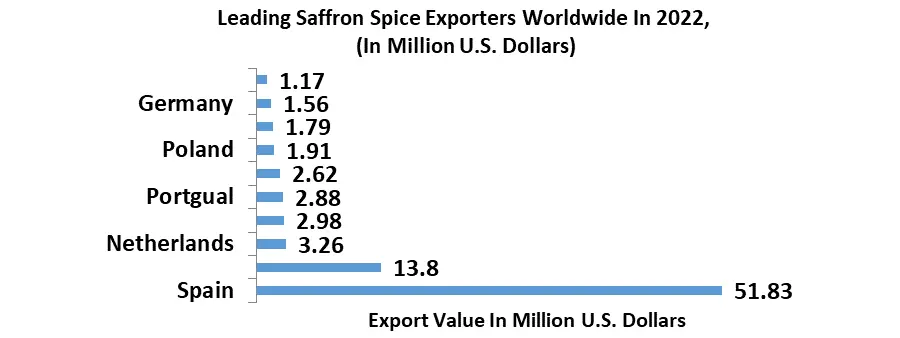 Nutraceutical growing Demand Escalation for Saffron-based Supplements:
Saffron's medicinal properties position it favorably in the health and wellness sector. With growing awareness, demand surges for saffron-based supplements and extracts, like saffron-infused teas or capsules, tapping into the nutraceutical market. Saffron's antioxidant and anti-inflammatory attributes drive its integration into skincare, haircare, and beauty products. The rising preference for natural, herbal ingredients in cosmetics stimulates opportunities for saffron-infused creams, serums, and masks. Continuous innovation in food products, such as saffron-flavored gourmet foods, snacks, and ready-to-eat meals, offers substantial saffron market potential. Saffron's unique taste and color profile present opportunities for product differentiation and capturing niche saffron market.
Advancements in sustainable farming methods for saffron cultivation enhance yield and quality. This not only ensures consistent supply but also addresses eco-conscious consumer demands for responsibly sourced products, contributing to saffron market growth. Ongoing research into saffron's medicinal properties, like its anti-cancer potential, presents substantial opportunities in pharmaceuticals. Saffron extracts or compounds could potentially be integrated into novel drug formulations.
Chart: The Effect of the Saffron and its Constitutes In the Ocular Disease: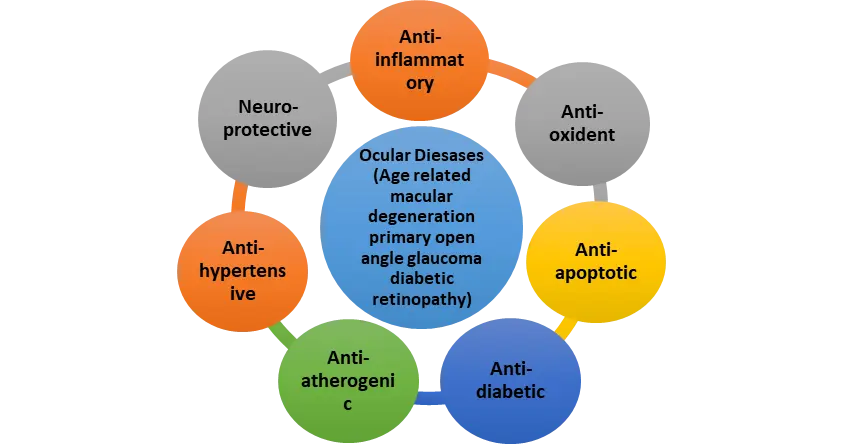
As the preference for natural colorants grows, saffron gains traction in various industries, including textiles and paints. The dyeing properties of saffron offer lucrative prospects in these sectors. The integration of saffron in diverse cuisines worldwide fuels its demand. Expanding culinary boundaries, like the incorporation of saffron in desserts, confectionery, and beverages, presents growth opportunities. Government initiatives promoting saffron cultivation and trade, coupled with investments in research and development, create favorable conditions for saffron market growth.
Supportive policies encourage farmers and boost saffron production. Saffron's status as a premium and luxury spice offers prospects in high-end saffron market, including gourmet stores, luxury hotels, and exclusive culinary events. Its exclusivity and cultural significance position it as a symbol of luxury. Innovations in extraction methods and technologies for saffron processing improve efficiency, quality, and product diversification, contributing to saffron market growth
Market Dominance Challenged by Alternative Spices and Synthetic Substitutes:
Saffron faces challenges due to prevalent adulteration, which compromises its quality and authenticity. Instances like the prevalence of impure saffron in global commodity markets exemplify the market's vulnerability to adulteration, impacting consumer trust and market value. Ensuring consistent quality standards across saffron products remains a challenge. The issue of poor packaging and concerns about saffron's purity, highlighted by difficulties in maintaining quality, affects market perception and consumer confidence.
The saffron market faces stiff competition from alternative spices and synthetic substitutes, challenging its market dominance. Competing products offering similar flavor or color profiles pose a threat, impacting saffron's market share and growth potential. Saffron's price volatility, influenced by factors like weather conditions and geopolitical issues in major producing regions, presents a challenge. Fluctuating prices affect supply chains and profit margins for both producers and consumers, creating market instability.
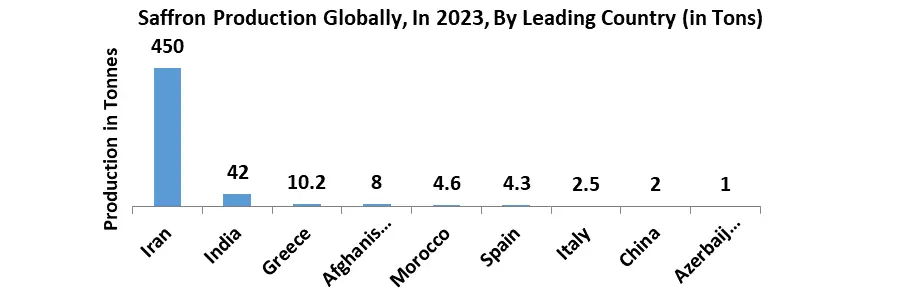
Saffron cultivation is geographically constrained to specific regions, leading to limited global production. Dependency on a few regions, such as Kashmir and Iran, makes the market susceptible to geopolitical uncertainties and climatic changes, impacting supply. Inadequate consumer knowledge about genuine saffron and its distinguishing characteristics contributes to the challenge of counterfeit products. Lack of awareness enables the proliferation of low-quality saffron substitutes on the market, hindering genuine saffron sales and market growth. Compliance with stringent quality standards and regulations in different countries adds complexity to international trade. Adherence to various regulatory requirements and certification processes poses challenges for saffron exporters and importers, affecting market accessibility. Environmental sustainability in saffron farming practices is crucial but remains a challenge.
The need for sustainable farming methods to address ecological impacts and maintain soil health is imperative for long-term saffron cultivation and market stability. Managing the saffron supply chain, including harvesting, processing, storage, and distribution, is complex. Challenges in logistics, storage conditions, and transportation impact the product's quality and shelf life, affecting market competitiveness. Educating consumers about the value and authenticity of saffron remains an ongoing challenge. Effective marketing strategies that communicate saffron's unique attributes and benefits are essential to overcome misconceptions and increase market demand.
Saffron Market Segment Analysis:
Based on formulation, the global Saffron Market is segmented into Powder, Liquid, and Thread. The thread segment dominates the Saffron Market with a major share globally. Increasing usage of the powder form of saffron for applications in the food & beverages industry and medical applications is expected to grow during the forecast period. A liquid segment was projected to account for a value share of 5.6%. The low availability of saffron in liquid form may restrain the revenue growth of the related segment over the forecast period. The powder segment will grow at the highest CAGR of XX% followed by thread and liquid in the Saffron Market.
Based on application, based on the application the Saffron market is segmented into Food, Medical, and Cosmetics. The food segment is expected to hold a volume share of 45% by 2030, owing to growing formulation use as a natural food ingredient. Saffron addition to various food types enhances the essence. Growth in the food sector in various regions is expected to fuel saffron demand. The increasing need from the cosmetics industry on account of its growing use in the production of fairness creams, anti-blemish lotions, and cleansers is expected to fuel industry growth. For example, CASA KOKOBERNA debuted its new Beautiful Body Collection in 2022 with Saffron Body Oil as its first product for skin strengthening.
The medical segment is foreseen to gain substantial growth on account of its use as an antioxidant, antiseptic, anti-depressant, and anti-convulsing formulation in the Saffron Market. Saffron contains anti-depressant components such as crocin and safranal, which are thought to help with nervous system disorders.
Saffron Market Regional Insights:
Asia Pacific dominates the saffron market and is expected to grow during the forecast period, with India being a key country in saffron cultivation, trade, and consumption. While not the primary saffron-producing region globally, India's significant saffron market growth is due to its consumption patterns and utilization of regional cuisines and traditional Ayurvedic medicine. Kashmiri saffron from India, known for its superior quality, contributes significantly to the country's dominance in this saffron market. Moreover, countries like Iran and Afghanistan, prominent saffron producers in the region, have witnessed a surge in saffron cultivation and trade, boosting the market's growth trajectory. The growing awareness of saffron's medicinal properties, culinary applications, and its integration into various industries ensures sustained saffron market growth in Asia Pacific.
North America stands as a pivotal region in the global saffron market, primarily driven by increasing awareness regarding the health benefits of saffron and its diverse applications in the culinary, pharmaceutical, and cosmetic industries. The United States, in particular, dominates this region due to the rising demand for natural remedies and the incorporation of saffron into supplements, skincare, and gourmet foods. For instance, companies like Rumi Spice have played a pivotal role in promoting Afghan saffron in the United States, highlighting the saffron market potential and quality of saffron from this region. North America's saffron market continues to witness substantial growth, attributed to the ongoing trend of health consciousness and the exploration of saffron's versatile uses beyond traditional boundaries.
Europe has a longstanding heritage and tradition associated with saffron usage, particularly in culinary practices, which continues to maintain its dominance in the global saffron market. Spain stands out as a significant producer and consumer of saffron within Europe, cultivating high-quality saffron in La Mancha. The country's strict regulatory measures and geographical indication status for Spanish saffron reinforce its saffron market dominance and authenticity. The European saffron market exhibits an increasing inclination toward organic and premium saffron variants, fostering demand and sales in luxury and high-end markets. The incorporation of saffron in various European cuisines, from paellas to risottos, bolsters its market position, emphasizing the region's role in the saffron market's growth and innovation.
Saffron Industry Ecosystem

Saffron Market Competitive Landscape
The saffron market is driving the market's growth and consumer interest through innovative products and enhanced quality assurances. Tata Consumer Products' introduction of Grade 1 Kashmiri saffron under the Himalayan brand, imported directly from Kashmir and validated by an AI-enabled QR code for authenticity, addresses consumer concerns regarding saffron purity. Similarly, the Safr'Inside patent by Activ'Inside, featuring Techcare encapsulation technology, preserves saffron's native composition, ensuring high safranal content, thus expanding the market's premium, full-spectrum product offerings. Pharmactive Biotech's Affron, with its US-granted patent for low mood support, solidifies its leadership in the mental wellness category, stimulating demand for saffron-based supplements.
Natac Group's acquisition of INOREAL strengthens its saffron extracts portfolio, promising easier access to high-quality bioactive components, and fostering consumer trust with clinically supported branded ingredients. The Times of India's publication highlighting saffron's therapeutic properties further amplifies its significance, especially during the COVID-19 pandemic, elevating awareness and fostering increased demand for saffron as a health-boosting spice. These developments collectively drive market growth, instilling confidence in consumers by offering quality-assured, innovative saffron-based products catering to diverse needs.
In August 2023, Tata Consumer Products broadened its product line with the introduction of Grade 1 Kashmiri saffron under the Himalayan brand, sourced directly from Kashmir. This saffron offering ensures purity and excellence, featuring an AI-enabled QR code for seamless authentication, enhancing consumer trust and confidence in the product's authenticity.
In February 2023, Activ'Inside, based in Bordeaux, France, secured a new patent in the United States for its saffron stigma extract, Safr'Inside. This patent safeguards the composition and dosage of safranol within the encapsulated saffron extract, utilizing Techcare encapsulation technology to preserve saffron's native composition. The innovation ensures a comprehensive product spectrum and a high concentration of safranal content, ensuring product quality and efficacy.
In May 2022, Pharmactive Biotech Products, S.L.U.'s premium saffron ingredient, Affron, solidified its leadership in the US saffron mental wellness category. Bolstered by its exclusive US-granted patent for low mood support, Affron witnessed substantial growth in the first quarter of 2022, consolidating its position as a preferred choice for mental well-being.
In June 2022, Natac Group strengthened its foothold in the saffron extracts sector through the acquisition of French biotech INOREAL. This strategic move enables Natac to offer consumers high-quality bioactive components with simplified access, backed by substantial clinical data, enhancing the availability of premium-grade branded ingredients.
Saffron Market Scope: Inquire before buying
| Global Saffron Market | |||
|---|---|---|---|
| Report Coverage | Details | ||
| Base Year: | 2025 | Forecast Period: | 2026-2032 |
| Historical Data: | 2020 to 2025 | Market Size in 2025: | USD 1.28 Bn. |
| Forecast Period 2026 to 2032 CAGR: | 7.3% | Market Size in 2032: | USD 2.11 Bn. |
| Segments Covered: | By Formulation | Liquid Powder Stigma Petals Stamen |
|
| by Type | Organic Conventional |
||
| By Grade | Grade I By Grade II Grade III Grade IV |
||
| By Application | Food Supplements Cosmetics Personal Care Products Food & Beverage Others |
||
| By Distribution Channel | B2B B2C |
||
Saffron Market, by Region
North America (United States, Canada and Mexico)
Europe (UK, France, Germany, Italy, Spain, Sweden, Austria and Rest of Europe)
Asia Pacific (China, South Korea, Japan, India, Australia, Indonesia, Malaysia, Vietnam, Taiwan, Bangladesh, Pakistan and Rest of APAC)
Middle East and Africa (South Africa, GCC, Egypt, Nigeria and Rest of ME&A)
South America (Brazil, Argentina Rest of South America)
Saffron Market, Key Players:
North America
1. Great American Spice
2. Mehr Saffron
Europe
3. HEA & Co
4. Golden Saffron Co.
5. Azafran de la Mancha
APAC
6. Royal Saffron
7. kingkesariya
8. Royal Spices International
9. Shahsaffron.
10. Shiva Saffron
Midle East
11. Gohar Saffron
12. Rowhani Saffron Co.
13. Linkage Internationals
14. Iran Saffron Company
15. ajfan store
16. Tarvand Saffron Co.
17. Grandor Co.
18. Novin Saffron Co.
19. saffronir
FAQs:
1. What are the growth drivers for the market?
Ans. Medicinal Potentials Drive Saffron's Demand in the Pharmaceuticals and Wellness Industry expected to be the major driver for the market.
2. What are the major Opportunity for the market growth?
Ans. Nutraceutical growing Demand Escalation for Saffron-based Supplements are the major opportunity for the saffron market.
3. Which country is expected to lead the global Saffron Market during the forecast period?
Ans. Asia Pacific is expected to lead the market during the forecast period.
4. What is the projected market size and growth rate of the Saffron Market?
Ans. The Saffron Market size was valued at USD 1.27 Billion in 2025 and the total Saffron revenue is expected to grow at a CAGR of 7.3% from 2025 to 2032, reaching nearly USD 2.18 Billion by 2032.
5. What segments are covered in the Saffron Market report?
Ans. The segments covered in the market report are by Formulation, Type, Grade, Application, Distribution Channel, and Region.