Tanker Shipping Market - Industry Structure Evaluation, Demand Drivers Analysis, Regional Growth Analysis and Identification, Competitive Positioning Review & Global Market Size Forecast to 2032

6%
CAGR (2026-2032)
3.75 USD Bn.
Market Size
311
Report Pages
152
Market Tables

Overview

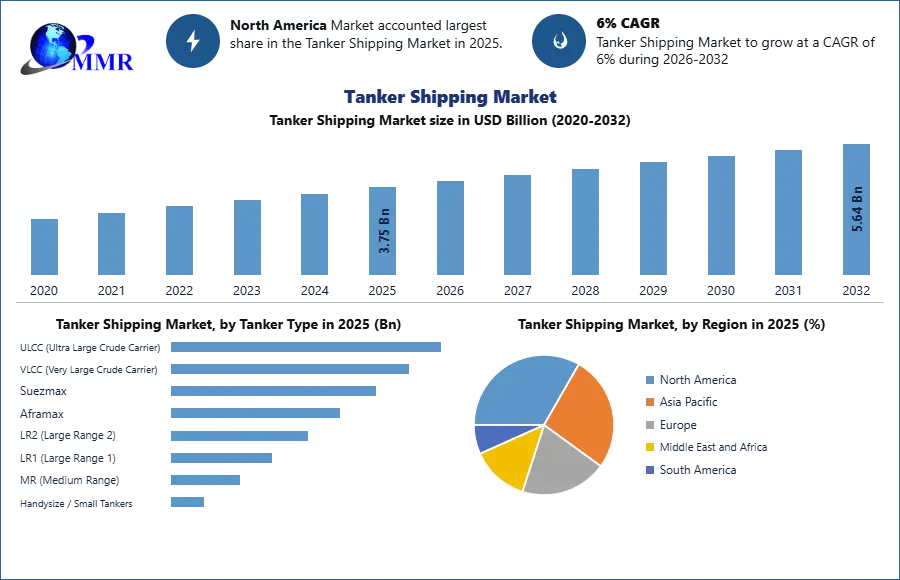
Tanker Shipping Market is expected to grow at a CAGR of 6% during the forecast period. Tanker Shipping Market is expected to reach USD 5.64 Bn. by 2032.

The Tanker Shipping market report is a comprehensive analysis of the industry, market, and key players. The report has covered the market by demand and supply-side by segments. The Global Tanker Shipping report also provides trends by market segments, technology, and investment with a competitive landscape.

This report analyzes the Tanker Shipping Market as the 2026 Middle East crisis triggers the "largest supply disruption in history." With the Strait of Hormuz blockaded since March 2026, over 20% of global seaborne crude and LNG has been stranded, driving VLCC (Very Large Crude Carrier) spot rates to unprecedented, "never-before-seen" highs. We explore how market leaders are leveraging AI-driven "Self-Optimizing" route planning and advanced fleet management to navigate 400% spikes in war-risk insurance and the total rerouting of trade via the Cape of Good Hope. By evaluating the surge in IMO 2 chemical tanker demand and dark fleet monitoring, this study provides stakeholders with strategic frameworks to maintain operational liquidity in a high-inflation landscape where maritime energy security has become the ultimate global commodity.
Tanker Shipping MarketTo know about the Research Methodology :- Request Free Sample Report

Tanker Shipping Market Overview:

Tanker shipping is basically the transportation of bulk chemicals, goods, crude oil, and other refined chemicals obtained from crude oil. Tanker shipping is mainly carried out through the sea route by using very large-sized transport carriers. It is considered an economical way of fluid transportation from one part of the globe to another. Increasing commodity trading across the globe along with rising economical standout in the past decade are the factors considered to drive the tanker shipping market during the forecast period. Tankers are considered more efficient owing to their capacity to carry large shipments with large amounts of fluids. Due to this large accommodation capacity, commodity products and oil and natural gas shipments generally use tankers to carry out a smooth flow of transportation.

Tanker Shipping Market Dynamics:

Increasing technological advancements in the shipping sector and demand for high volume transportations across the globe are the factors considered to drive the tanker shipping market growth. Moreover, increasing demand for oil and gas in developing countries and thereby, increasing transport ventures by emerging economies is the supporting factor considered to drive the market growth. Increasing shipbuilding across the globe is considered to boost the market demand during the forecast period creating supply opportunities in the tanker shipping market.

Some Environmental regulation norms and increasing supply than demand in the market are the factors considered to hamper the market growth during the forecast period. Furthermore, a high number of tankers and declining demand for transportation for commodities is the key factor considered to restrain the market growth.

Increasing demand for crude oil is the key factor expected to create opportunities in the market for the prominent shipping companies across the globe. On the other hand, fluctuating oil prices across the globe is the key challenge considered to hamper the market growth during the forecast period.

Tanker Shipping Market Segment Analysis:

Very Large Crude Carriers (VLCC) Dominates the Tanker Shipping Market:

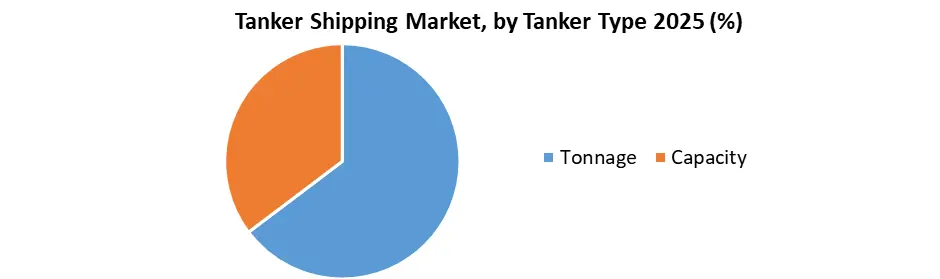
VLCC carriers are known for their high transportation capacity and reliability. Owing to the US-China trade, crude oil exports from the Middle East to North America are increasing and millions of gallons of oil and natural gas are expected to go eastwards. Suezmax is used as low volume carrying tanker with high technological advancements. Though Suezmax is considered low capacity tanker, shipping companies use the above tankers for small routes owing to their fast pace of transportation.
Tanker Shipping Market by Tanker Type

Crude oil and LPG is the Dominating Fluid Segment in Tanker Shipping Market:

Crude oil is one of the most consumed commodities across the globe. According to US Energy Information Administration, 8.3 million barrels per day (bpd) is the revised capacity of crude oil post-pandemic and LPG was accounted for 3.8 million bpd in the year 2021 owing to increasing fuel prices in the year. Moreover, higher exports from major producers owing to lowering of crude prices pre-pandemic adhered to the market growth. APAC is the most dominating region in terms of consumption of crude oil owing to increasing manufacturing activities in the region and accounted for approximately 39% of imports of crude oil.

Inland sea routes segment is expected to dominate the Tanker Shipping Market:

Many shipping companies prefer the inland sea routes owing to the increasing efficiency of transportation and time-saving capabilities of inland sea routes. For instance, Suez Canal is the world’s busiest inland sea route as more than 53 vessels including VLCCs, ULCCs, LR2 and more than 150 small carriers go through the canal per day. Inland sea routes also provide a ship halting base for the crew as well as shipments which in turn helps to increase the local businesses in the region.

Tanker Shipping Market Regional Insights:

Asia Pacific holds the major share in the Tanker Shipping Market with approximately 53% of total market share in year 2021 owing to increasing demand for oil and gas as well as commodities sector in the region. China, India, Japan and others are the prominent players in the market owing to increasing government support and high domestic production rates in the respective countries. China is the dominating market in the region in terms of volume share as approximately 63% of crude oil and commodities are export from the Chinese coast to different regions followed by India and Japan. Indian market is expected to pose a relatively high share in the market as the contribution of Power generation and commodities export is relatively high in the GDP growth of the country as prominent player’s investments in the industry is increased by almost 4% during years 2021-2025 despite the lockdown conditions.

Europe is the fastest-growing region in the Tanker Shipping Market with approximately 34% market share. Factors attributing growth in the market are the abundance of key manufacturers of Tanker Shipping in the region. The UK holds the largest market share of approximately 47% owing to shipping routes present in the region and prominent location for trading and shipping of goods.

North America holds the dominant share in the market owing to high trade participation of North America with various regions across the globe and comparatively demanding trade policies including transportation tax reduction and high VLCCs manufacturing in the region.

The objective of the report is to present a comprehensive analysis of the Global Tanker Shipping Market to the stakeholders in the industry. The past and current status of the industry with the forecasted market size and trends are presented in the report with the analysis of complicated data in simple language. The report covers all the aspects of the industry with a dedicated study of key players that include market leaders, followers, and new entrants.

PORTER, PESTEL analysis with the potential impact of micro-economic factors of the market have been presented in the report. External as well as internal factors that are supposed to affect the business positively or negatively have been analyzed, which will give a clear futuristic view of the industry to the decision-makers.

The report also helps in understanding the Global Tanker Shipping Market dynamics, structure by analyzing the market segments and project the Global Tanker Shipping Market size. Clear representation of competitive analysis of key players by Type, price, financial position, Type portfolio, growth strategies, and regional presence in the Global Tanker Shipping Market make the report investor’s guide

Recent Industry Developments

Exact Date Company Development Impact
26 January 2026 Poten & Partners The firm issued a strategic forecast predicting a contraction of the sanctioned tanker fleet for the first time since 2021 due to heightened pressure on Russian crude importers. This development signals a reintegration of tonnage into the compliant market, potentially stabilizing global freight rates.
29 December 2025 Tsakos Energy Navigation The company finalized an order for nine Suezmax shuttle tankers specifically designed for long-term operations with Petrobras. This move triples the firm’s Suezmax shuttle fleet, securing a dominant position in the high-barrier South American offshore market.
03 November 2025 Eastern Pacific Shipping The operator implemented advanced digital fuel-optimization tools across its tanker fleet to meet 2026 carbon intensity standards. The adoption of these technologies provides a competitive cost advantage by significantly reducing fuel consumption and regulatory risk.
18 July 2025 European Union The EU formally adopted its 18th sanctions package, specifically targeting the flag registries of the "shadow fleet" and lowering the oil price cap. This regulation forces stricter compliance audits for tanker owners, effectively tightening the supply of available global tonnage.
10 April 2025 Tidewater The company completed a US$500 million acquisition of a specialized Brazilian tanker fleet to expand its regional energy logistics footprint. The acquisition consolidates the South Atlantic trade route, making Tidewater a primary provider for regional oil majors.

Tanker Shipping Market Scope: Inquire before buying

Tanker Shipping Market
Report Coverage Details
Base Year: 2025 Forecast Period: 2026-2032
Historical Data: 2020 to 2025 Market Size in 2025: 3.75 USD Billion
Forecast Period 2026-2032 CAGR: 6% Market Size in 2032: 5.64 USD Billion
Segments Covered: by Tanker Type ULCC (Ultra Large Crude Carrier)
VLCC (Very Large Crude Carrier)
Suezmax
Aframax
LR2 (Large Range 2)
LR1 (Large Range 1)
MR (Medium Range)
Handysize / Small Tankers
by Fluid Type Crude Oil
Refined Fuel
Vegetable Oil
LPG
Wine
Molasses
Others
by Shipment Route Coastal
Deep Sea
Inland

Tanker Shipping Market, by Region

North America (United States, Canada and Mexico)
Europe (UK, France, Germany, Italy, Spain, Sweden, Austria and Rest of Europe)
Asia Pacific (China, South Korea, Japan, India, Australia, Indonesia, Malaysia, Vietnam, Taiwan, Bangladesh, Pakistan and Rest of APAC)
Middle East and Africa (South Africa, GCC, Egypt, Nigeria and Rest of ME&A)
South America (Brazil, Argentina Rest of South America)

Key Players / Competitors Profiles Covered in Brief in Global Tanker Shipping Market Report in Strategic Perspective:

  1. Nordic Tankers
  2. Tokyo Marine
  3. MISC
  4. Navig8 Chemicals
  5. IINO KAIUN KAISHA
  6. Stolt-Nielsen
  7. Euronav
  8. AET Tankers
  9. Mitsui O.S.K. Lines (MOL)
  10. Teekay Corporation
  11. Scorpio Tankers Inc.
  12. Frontline Ltd.
  13. DHT Holdings, Inc.
  14. Tsakos Energy Navigation
  15. International Seaways, Inc.
  16. SFL Corp Ltd.
  17. China COSCO Shipping Corporation Limited
  18. Bahri (The National Shipping Company of Saudi Arabia)
  19. Hafnia Limited
  20. Odfjell SE
  21. Ardmore Shipping Corporation
  22. Maran Tankers Management
  23. Torm PLC
  24. Concordia Maritime
  25. Okeanis Eco Tankers Corp.

Frequently Asked Questions

1. What is the projected size and growth of the Tanker Shipping Market?
Ans. The market valuation is 3.75 USD Billion in 2025, reaching 5.64 USD Billion by 2032, maintaining a 6% CAGR driven by global energy demand and trade.

2. Which region holds the largest Tanker Shipping Market share in 2026?
Ans. Asia Pacific dominates with a 53% share, fueled by high crude oil consumption, industrial manufacturing in China, and significant infrastructure investments across the Indian energy sector.

3. What are the primary Tanker Shipping Market trends for 2026?
Ans. Key trends include fleet digitalization for fuel optimization, carbon intensity compliance, and the reintegration of sanctioned vessels into the compliant market to stabilize global freight rates.

4. Which vessel types are leading the Tanker Shipping Market growth?
Ans. VLCC units dominate due to high capacity and reliability, while Suezmax vessels gain traction on shorter routes owing to technological advancements and faster transportation pace.

5. How is the "shadow fleet" affecting the Tanker Shipping Market outlook?
Ans. Stricter EU sanctions targeting flag registries of unauthorized vessels are tightening global tonnage supply, forcing owners to conduct rigorous compliance audits to ensure market stability.

6. What are the major Tanker Shipping Market drivers and challenges?
Ans. Growth is driven by rising oil demand and shipbuilding, while fluctuating fuel prices and stringent environmental regulation norms remain significant challenges for global shipping companies.

Table of Contents

1. Tanker Shipping Market Introduction
1.1. Study Assumption and Market Definition
1.2. Scope of the Study
1.3. Executive Summary
2. Global Tanker Shipping Market: Competitive Landscape
2.1. MMR Competition Matrix
2.2. Competitive Landscape
2.3. Key Players Benchmarking
2.3.1. Company Name
2.3.2. Business Segment
2.3.3. End-user Segment
2.3.4. Revenue (2025)
2.3.5. Company Locations
2.4. Leading Tanker Shipping Market Companies, by market capitalization
2.5. Market Structure
2.5.1. Market Leaders
2.5.2. Market Followers
2.5.3. Emerging Players
2.6. Mergers and Acquisitions Details
3. Tanker Shipping Market: Dynamics
3.1. Tanker Shipping Market Trends by Region
3.1.1. North America Tanker Shipping Market Trends
3.1.2. Europe Tanker Shipping Market Trends
3.1.3. Asia Pacific Tanker Shipping Market Trends
3.1.4. Middle East and Africa Tanker Shipping Market Trends
3.1.5. South America Tanker Shipping Market Trends
3.2. Tanker Shipping Market Dynamics by Region
3.2.1. North America
3.2.1.1. North America Tanker Shipping Market Drivers
3.2.1.2. North America Tanker Shipping Market Restraints
3.2.1.3. North America Tanker Shipping Market Opportunities
3.2.1.4. North America Tanker Shipping Market Challenges
3.2.2. Europe
3.2.2.1. Europe Tanker Shipping Market Drivers
3.2.2.2. Europe Tanker Shipping Market Restraints
3.2.2.3. Europe Tanker Shipping Market Opportunities
3.2.2.4. Europe Tanker Shipping Market Challenges
3.2.3. Asia Pacific
3.2.3.1. Asia Pacific Tanker Shipping Market Drivers
3.2.3.2. Asia Pacific Tanker Shipping Market Restraints
3.2.3.3. Asia Pacific Tanker Shipping Market Opportunities
3.2.3.4. Asia Pacific Tanker Shipping Market Challenges
3.2.4. Middle East and Africa
3.2.4.1. Middle East and Africa Tanker Shipping Market Drivers
3.2.4.2. Middle East and Africa Tanker Shipping Market Restraints
3.2.4.3. Middle East and Africa Tanker Shipping Market Opportunities
3.2.4.4. Middle East and Africa Tanker Shipping Market Challenges
3.2.5. South America
3.2.5.1. South America Tanker Shipping Market Drivers
3.2.5.2. South America Tanker Shipping Market Restraints
3.2.5.3. South America Tanker Shipping Market Opportunities
3.2.5.4. South America Tanker Shipping Market Challenges
3.3. PORTER's Five Forces Analysis
3.4. PESTLE Analysis
3.5. Technology Roadmap
3.6. Regulatory Landscape by Region
3.6.1. North America
3.6.2. Europe
3.6.3. Asia Pacific
3.6.4. Middle East and Africa
3.6.5. South America
3.7. Key Opinion Leader Analysis For Tanker Shipping Industry
3.8. Analysis of Government Schemes and Initiatives For Tanker Shipping Industry
3.9. Tanker Shipping Market Trade Analysis
3.10. The Global Pandemic Impact on Tanker Shipping Market
4. Tanker Shipping Market: Global Market Size and Forecast by Segmentation (in USD Billion) 2025-2032
4.1. Tanker Shipping Market Size and Forecast, by Tanker Type (2025-2032)
4.1.1. ULCC (Ultra Large Crude Carrier)
4.1.2. VLCC (Very Large Crude Carrier)
4.1.3. Suezmax
4.1.4. Aframax
4.1.5. LR2 (Large Range 2)
4.1.6. LR1 (Large Range 1)
4.1.7. MR (Medium Range)
4.1.8. Handysize / Small Tankers
4.2. Tanker Shipping Market Size and Forecast, by Fluid Type (2025-2032)
4.2.1. Crude Oil
4.2.2. Refined Fuel
4.2.3. Vegetable Oil
4.2.4. LPG
4.2.5. Wine
4.2.6. Molasses
4.2.7. Others
4.3. Tanker Shipping Market Size and Forecast, by Shipment Route (2025-2032)
4.3.1. Coastal
4.3.2. Deep Sea
4.3.3. Inland
4.4. Tanker Shipping Market Size and Forecast, by Region (2025-2032)
4.4.1. North America
4.4.2. Europe
4.4.3. Asia Pacific
4.4.4. Middle East and Africa
4.4.5. South America
5. North America Tanker Shipping Market Size and Forecast by Segmentation (in USD Billion) 2025-2032
5.1. North America Tanker Shipping Market Size and Forecast, by Tanker Type (2025-2032)
5.1.1. ULCC (Ultra Large Crude Carrier)
5.1.2. VLCC (Very Large Crude Carrier)
5.1.3. Suezmax
5.1.4. Aframax
5.1.5. LR2 (Large Range 2)
5.1.6. LR1 (Large Range 1)
5.1.7. MR (Medium Range)
5.1.8. Handysize / Small Tankers
5.2. North America Tanker Shipping Market Size and Forecast, by Fluid Type (2025-2032)
5.2.1. Crude Oil
5.2.2. Refined Fuel
5.2.3. Vegetable Oil
5.2.4. LPG
5.2.5. Wine
5.2.6. Molasses
5.2.7. Others
5.3. North America Tanker Shipping Market Size and Forecast, by Shipment Route (2025-2032)
5.3.1. Coastal
5.3.2. Deep Sea
5.3.3. Inland
5.4. North America Tanker Shipping Market Size and Forecast, by Country (2025-2032)
5.4.1. United States
5.4.1.1. United States Tanker Shipping Market Size and Forecast, by Tanker Type (2025-2032)
5.4.1.1.1. ULCC (Ultra Large Crude Carrier)
5.4.1.1.2. VLCC (Very Large Crude Carrier)
5.4.1.1.3. Suezmax
5.4.1.1.4. Aframax
5.4.1.1.5. LR2 (Large Range 2)
5.4.1.1.6. LR1 (Large Range 1)
5.4.1.1.7. MR (Medium Range)
5.4.1.1.8. Handysize / Small Tankers
5.4.1.2. United States Tanker Shipping Market Size and Forecast, by Fluid Type (2025-2032)
5.4.1.2.1. Crude Oil
5.4.1.2.2. Refined Fuel
5.4.1.2.3. Vegetable Oil
5.4.1.2.4. LPG
5.4.1.2.5. Wine
5.4.1.2.6. Molasses
5.4.1.2.7. Others
5.4.1.3. United States Tanker Shipping Market Size and Forecast, by Shipment Route (2025-2032)
5.4.1.3.1. Coastal
5.4.1.3.2. Deep Sea
5.4.1.3.3. Inland
5.4.2. Canada
5.4.2.1. Canada Tanker Shipping Market Size and Forecast, by Tanker Type (2025-2032)
5.4.2.1.1. ULCC (Ultra Large Crude Carrier)
5.4.2.1.2. VLCC (Very Large Crude Carrier)
5.4.2.1.3. Suezmax
5.4.2.1.4. Aframax
5.4.2.1.5. LR2 (Large Range 2)
5.4.2.1.6. LR1 (Large Range 1)
5.4.2.1.7. MR (Medium Range)
5.4.2.1.8. Handysize / Small Tankers
5.4.2.2. Canada Tanker Shipping Market Size and Forecast, by Fluid Type (2025-2032)
5.4.2.2.1. Crude Oil
5.4.2.2.2. Refined Fuel
5.4.2.2.3. Vegetable Oil
5.4.2.2.4. LPG
5.4.2.2.5. Wine
5.4.2.2.6. Molasses
5.4.2.2.7. Others
5.4.2.3. Canada Tanker Shipping Market Size and Forecast, by Shipment Route (2025-2032)
5.4.2.3.1. Coastal
5.4.2.3.2. Deep Sea
5.4.2.3.3. Inland
5.4.3. Mexico
5.4.3.1. Mexico Tanker Shipping Market Size and Forecast, by Tanker Type (2025-2032)
5.4.3.1.1. ULCC (Ultra Large Crude Carrier)
5.4.3.1.2. VLCC (Very Large Crude Carrier)
5.4.3.1.3. Suezmax
5.4.3.1.4. Aframax
5.4.3.1.5. LR2 (Large Range 2)
5.4.3.1.6. LR1 (Large Range 1)
5.4.3.1.7. MR (Medium Range)
5.4.3.1.8. Handysize / Small Tankers
5.4.3.2. Mexico Tanker Shipping Market Size and Forecast, by Fluid Type (2025-2032)
5.4.3.2.1. Crude Oil
5.4.3.2.2. Refined Fuel
5.4.3.2.3. Vegetable Oil
5.4.3.2.4. LPG
5.4.3.2.5. Wine
5.4.3.2.6. Molasses
5.4.3.2.7. Others
5.4.3.3. Mexico Tanker Shipping Market Size and Forecast, by Shipment Route (2025-2032)
5.4.3.3.1. Coastal
5.4.3.3.2. Deep Sea
5.4.3.3.3. Inland
6. Europe Tanker Shipping Market Size and Forecast by Segmentation (in USD Billion) 2025-2032
6.1. Europe Tanker Shipping Market Size and Forecast, by Tanker Type (2025-2032)
6.2. Europe Tanker Shipping Market Size and Forecast, by Fluid Type (2025-2032)
6.3. Europe Tanker Shipping Market Size and Forecast, by Shipment Route (2025-2032)
6.4. Europe Tanker Shipping Market Size and Forecast, by Country (2025-2032)
6.4.1. United Kingdom
6.4.1.1. United Kingdom Tanker Shipping Market Size and Forecast, by Tanker Type (2025-2032)
6.4.1.2. United Kingdom Tanker Shipping Market Size and Forecast, by Fluid Type (2025-2032)
6.4.1.3. United Kingdom Tanker Shipping Market Size and Forecast, by Shipment Route (2025-2032)
6.4.2. France
6.4.2.1. France Tanker Shipping Market Size and Forecast, by Tanker Type (2025-2032)
6.4.2.2. France Tanker Shipping Market Size and Forecast, by Fluid Type (2025-2032)
6.4.2.3. France Tanker Shipping Market Size and Forecast, by Shipment Route (2025-2032)
6.4.3. Germany
6.4.3.1. Germany Tanker Shipping Market Size and Forecast, by Tanker Type (2025-2032)
6.4.3.2. Germany Tanker Shipping Market Size and Forecast, by Fluid Type (2025-2032)
6.4.3.3. Germany Tanker Shipping Market Size and Forecast, by Shipment Route (2025-2032)
6.4.4. Italy
6.4.4.1. Italy Tanker Shipping Market Size and Forecast, by Tanker Type (2025-2032)
6.4.4.2. Italy Tanker Shipping Market Size and Forecast, by Fluid Type (2025-2032)
6.4.4.3. Italy Tanker Shipping Market Size and Forecast, by Shipment Route (2025-2032)
6.4.5. Spain
6.4.5.1. Spain Tanker Shipping Market Size and Forecast, by Tanker Type (2025-2032)
6.4.5.2. Spain Tanker Shipping Market Size and Forecast, by Fluid Type (2025-2032)
6.4.5.3. Spain Tanker Shipping Market Size and Forecast, by Shipment Route (2025-2032)
6.4.6. Sweden
6.4.6.1. Sweden Tanker Shipping Market Size and Forecast, by Tanker Type (2025-2032)
6.4.6.2. Sweden Tanker Shipping Market Size and Forecast, by Fluid Type (2025-2032)
6.4.6.3. Sweden Tanker Shipping Market Size and Forecast, by Shipment Route (2025-2032)
6.4.7. Austria
6.4.7.1. Austria Tanker Shipping Market Size and Forecast, by Tanker Type (2025-2032)
6.4.7.2. Austria Tanker Shipping Market Size and Forecast, by Fluid Type (2025-2032)
6.4.7.3. Austria Tanker Shipping Market Size and Forecast, by Shipment Route (2025-2032)
6.4.8. Rest of Europe
6.4.8.1. Rest of Europe Tanker Shipping Market Size and Forecast, by Tanker Type (2025-2032)
6.4.8.2. Rest of Europe Tanker Shipping Market Size and Forecast, by Fluid Type (2025-2032)
6.4.8.3. Rest of Europe Tanker Shipping Market Size and Forecast, by Shipment Route (2025-2032)
7. Asia Pacific Tanker Shipping Market Size and Forecast by Segmentation (in USD Billion) 2025-2032
7.1. Asia Pacific Tanker Shipping Market Size and Forecast, by Tanker Type (2025-2032)
7.2. Asia Pacific Tanker Shipping Market Size and Forecast, by Fluid Type (2025-2032)
7.3. Asia Pacific Tanker Shipping Market Size and Forecast, by Shipment Route (2025-2032)
7.4. Asia Pacific Tanker Shipping Market Size and Forecast, by Country (2025-2032)
7.4.1. China
7.4.1.1. China Tanker Shipping Market Size and Forecast, by Tanker Type (2025-2032)
7.4.1.2. China Tanker Shipping Market Size and Forecast, by Fluid Type (2025-2032)
7.4.1.3. China Tanker Shipping Market Size and Forecast, by Shipment Route (2025-2032)
7.4.2. S Korea
7.4.2.1. S Korea Tanker Shipping Market Size and Forecast, by Tanker Type (2025-2032)
7.4.2.2. S Korea Tanker Shipping Market Size and Forecast, by Fluid Type (2025-2032)
7.4.2.3. S Korea Tanker Shipping Market Size and Forecast, by Shipment Route (2025-2032)
7.4.3. Japan
7.4.3.1. Japan Tanker Shipping Market Size and Forecast, by Tanker Type (2025-2032)
7.4.3.2. Japan Tanker Shipping Market Size and Forecast, by Fluid Type (2025-2032)
7.4.3.3. Japan Tanker Shipping Market Size and Forecast, by Shipment Route (2025-2032)
7.4.4. India
7.4.4.1. India Tanker Shipping Market Size and Forecast, by Tanker Type (2025-2032)
7.4.4.2. India Tanker Shipping Market Size and Forecast, by Fluid Type (2025-2032)
7.4.4.3. India Tanker Shipping Market Size and Forecast, by Shipment Route (2025-2032)
7.4.5. Australia
7.4.5.1. Australia Tanker Shipping Market Size and Forecast, by Tanker Type (2025-2032)
7.4.5.2. Australia Tanker Shipping Market Size and Forecast, by Fluid Type (2025-2032)
7.4.5.3. Australia Tanker Shipping Market Size and Forecast, by Shipment Route (2025-2032)
7.4.6. Indonesia
7.4.6.1. Indonesia Tanker Shipping Market Size and Forecast, by Tanker Type (2025-2032)
7.4.6.2. Indonesia Tanker Shipping Market Size and Forecast, by Fluid Type (2025-2032)
7.4.6.3. Indonesia Tanker Shipping Market Size and Forecast, by Shipment Route (2025-2032)
7.4.7. Malaysia
7.4.7.1. Malaysia Tanker Shipping Market Size and Forecast, by Tanker Type (2025-2032)
7.4.7.2. Malaysia Tanker Shipping Market Size and Forecast, by Fluid Type (2025-2032)
7.4.7.3. Malaysia Tanker Shipping Market Size and Forecast, by Shipment Route (2025-2032)
7.4.8. Vietnam
7.4.8.1. Vietnam Tanker Shipping Market Size and Forecast, by Tanker Type (2025-2032)
7.4.8.2. Vietnam Tanker Shipping Market Size and Forecast, by Fluid Type (2025-2032)
7.4.8.3. Vietnam Tanker Shipping Market Size and Forecast, by Shipment Route (2025-2032)
7.4.9. Taiwan
7.4.9.1. Taiwan Tanker Shipping Market Size and Forecast, by Tanker Type (2025-2032)
7.4.9.2. Taiwan Tanker Shipping Market Size and Forecast, by Fluid Type (2025-2032)
7.4.9.3. Taiwan Tanker Shipping Market Size and Forecast, by Shipment Route (2025-2032)
7.4.10. Rest of Asia Pacific
7.4.10.1. Rest of Asia Pacific Tanker Shipping Market Size and Forecast, by Tanker Type (2025-2032)
7.4.10.2. Rest of Asia Pacific Tanker Shipping Market Size and Forecast, by Fluid Type (2025-2032)
7.4.10.3. Rest of Asia Pacific Tanker Shipping Market Size and Forecast, by Shipment Route (2025-2032)
8. Middle East and Africa Tanker Shipping Market Size and Forecast by Segmentation (in USD Billion) 2025-2032
8.1. Middle East and Africa Tanker Shipping Market Size and Forecast, by Tanker Type (2025-2032)
8.2. Middle East and Africa Tanker Shipping Market Size and Forecast, by Fluid Type (2025-2032)
8.3. Middle East and Africa Tanker Shipping Market Size and Forecast, by Shipment Route (2025-2032)
8.4. Middle East and Africa Tanker Shipping Market Size and Forecast, by Country (2025-2032)
8.4.1. South Africa
8.4.1.1. South Africa Tanker Shipping Market Size and Forecast, by Tanker Type (2025-2032)
8.4.1.2. South Africa Tanker Shipping Market Size and Forecast, by Fluid Type (2025-2032)
8.4.1.3. South Africa Tanker Shipping Market Size and Forecast, by Shipment Route (2025-2032)
8.4.2. GCC
8.4.2.1. GCC Tanker Shipping Market Size and Forecast, by Tanker Type (2025-2032)
8.4.2.2. GCC Tanker Shipping Market Size and Forecast, by Fluid Type (2025-2032)
8.4.2.3. GCC Tanker Shipping Market Size and Forecast, by Shipment Route (2025-2032)
8.4.3. Nigeria
8.4.3.1. Nigeria Tanker Shipping Market Size and Forecast, by Tanker Type (2025-2032)
8.4.3.2. Nigeria Tanker Shipping Market Size and Forecast, by Fluid Type (2025-2032)
8.4.3.3. Nigeria Tanker Shipping Market Size and Forecast, by Shipment Route (2025-2032)
8.4.4. Rest of ME&A
8.4.4.1. Rest of ME&A Tanker Shipping Market Size and Forecast, by Tanker Type (2025-2032)
8.4.4.2. Rest of ME&A Tanker Shipping Market Size and Forecast, by Fluid Type (2025-2032)
8.4.4.3. Rest of ME&A Tanker Shipping Market Size and Forecast, by Shipment Route (2025-2032)
9. South America Tanker Shipping Market Size and Forecast by Segmentation (in USD Billion) 2025-2032
9.1. South America Tanker Shipping Market Size and Forecast, by Tanker Type (2025-2032)
9.2. South America Tanker Shipping Market Size and Forecast, by Fluid Type (2025-2032)
9.3. South America Tanker Shipping Market Size and Forecast, by Shipment Route (2025-2032)
9.4. South America Tanker Shipping Market Size and Forecast, by Country (2025-2032)
9.4.1. Brazil
9.4.1.1. Brazil Tanker Shipping Market Size and Forecast, by Tanker Type (2025-2032)
9.4.1.2. Brazil Tanker Shipping Market Size and Forecast, by Fluid Type (2025-2032)
9.4.1.3. Brazil Tanker Shipping Market Size and Forecast, by Shipment Route (2025-2032)
9.4.2. Argentina
9.4.2.1. Argentina Tanker Shipping Market Size and Forecast, by Tanker Type (2025-2032)
9.4.2.2. Argentina Tanker Shipping Market Size and Forecast, by Fluid Type (2025-2032)
9.4.2.3. Argentina Tanker Shipping Market Size and Forecast, by Shipment Route (2025-2032)
9.4.3. Rest Of South America
9.4.3.1. Rest Of South America Tanker Shipping Market Size and Forecast, by Tanker Type (2025-2032)
9.4.3.2. Rest Of South America Tanker Shipping Market Size and Forecast, by Fluid Type (2025-2032)
9.4.3.3. Rest Of South America Tanker Shipping Market Size and Forecast, by Shipment Route (2025-2032)
10. Company Profile: Key Players
10.1. Nordic Tankers
10.1.1. Company Overview
10.1.2. Business Portfolio
10.1.3. Financial Overview
10.1.4. SWOT Analysis
10.1.5. Strategic Analysis
10.1.6. Scale of Operation (small, medium, and large)
10.1.7. Details on Partnership
10.1.8. Regulatory Accreditations and Certifications Received by Them
10.1.9. Awards Received by the Firm
10.1.10. Recent Developments
10.2. Tokyo Marine
10.3. MISC
10.4. Navig8 Chemicals
10.5. IINO KAIUN KAISHA
10.6. Stolt-Nielsen
10.7. Euronav
10.8. AET Tankers
10.9. Mitsui O.S.K. Lines (MOL)
10.10. Teekay Corporation
10.11. Scorpio Tankers Inc.
10.12. Frontline Ltd.
10.13. DHT Holdings Inc.
10.14. Tsakos Energy Navigation
10.15. International Seaways Inc.
10.16. SFL Corp Ltd.
10.17. China COSCO Shipping Corporation Limited
10.18. Bahri (The National Shipping Company of Saudi Arabia)
10.19. Hafnia Limited
10.20. Odfjell SE
10.21. Ardmore Shipping Corporation
10.22. Maran Tankers Management
10.23. Torm PLC
10.24. Concordia Maritime
10.25. Okeanis Eco Tankers Corp.
11. Key Findings
12. Industry Recommendations
13. Tanker Shipping Market: Research Methodology
14. Terms and Glossary

Custom Market Research Services

We Will Customise The Research For You, In Case The Report Listed Above Does Not Meet With Your Requirements