
Digital Humidity Sensor Market Size – Industry Structure Evaluation, Demand Drivers Analysis, Regional Growth Analysis and Identification, Competitive Positioning Review & Global Market Size Forecast to 2030
Overview
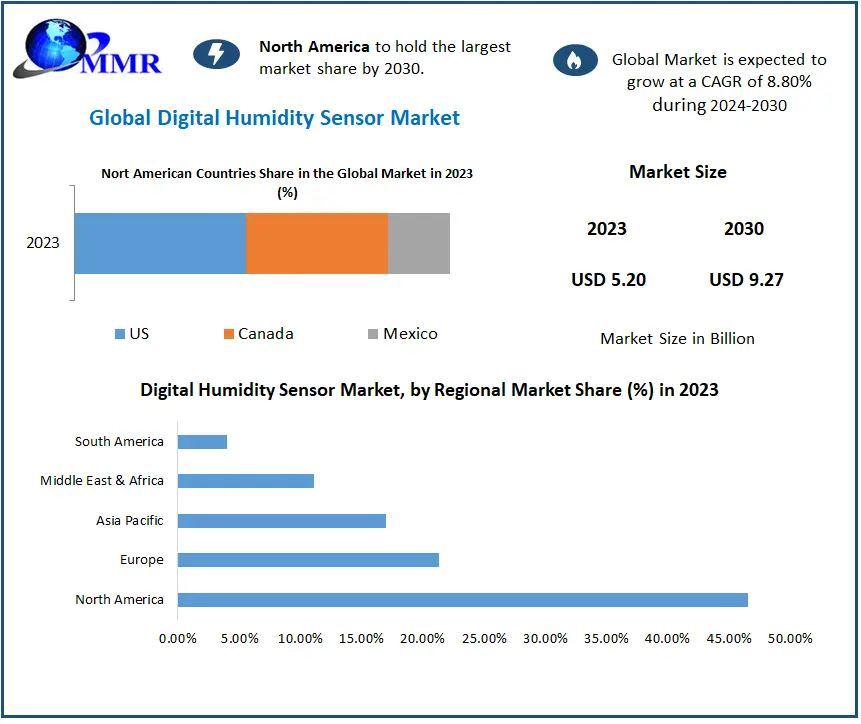
Digital Humidity Sensor Market was valued at USD 5.20 Bn in 2023 and is expected to reach USD 9.27 Bn by 2030, at a CAGR of 8.80 percent during the forecast period (2024-2030).
Digital Humidity Sensor Market Overview:
Digital humidity sensor is a very crucial instrument that is being used widely and variedly in the global markets. The invention of this multi-purpose device helped the technological world to achieve new milestones and added extra feathers to the cap. A digital humidity sensor is used to track and monitor the content of moisture in the surroundings. The device senses the amount of moisture around it and coverts it into digital output.
 To know about the Research Methodology :- Request Free Sample Report
The potential of the Digital Humidity Sensor market is comparatively high and is expected to expand in a multiplier basis. The increase in the use and preference of digital humidity sensors in multiple aspects like HVAC (Heat, Ventilation and Air Conditioning) systems, weather monitoring, healthcare, industrial and automotive, is aiding to the growth in this market. Also, the increasing awareness towards the health advantages gained by maintaining a proper and standardized humidity levels has led to a boost in the market size. The IoT and its evolution to create a pathway ahead to collaborate and integrate with these devices have also impacted the market growth in a positive manner.
The expanding use of IoT and cloud computing, as well as the rising need for smart homes and buildings, are cited in the research as factors that are propelling market expansion. Also, from 2021 to 2026, the global market for digital humidity sensors will expand at a CAGR of 7.5%. According to the study, the market is expanding as a result of factors like the rising need for environmental monitoring systems and the expanding trend towards energy-efficient buildings.
Digital Humidity Sensor Market Competitive Landscapes:
Digital Humidity Sensor Market Research Methodology
The market research surveys educates us about the demand, preferences, and expectations of the market for digital humidity sensors by conducting online or offline surveys among prospective consumers, industry professionals, or stakeholders. In order to discover what potential buyers are looking for in a product like this, the surveys can be developed to ask questions about the features, cost, performance, and other characteristics of the sensors. Competitor analysis in the Digital Humidity Sensor market helps us in finding the prospective opportunities and threats in the market for digital humidity sensors can be aided by researching the rivals' strategies, strengths, weaknesses, and market shares. The price, marketing, and product features can all be improved with the aid of this analysis.
The methodologies used in data mining supports us in finding patterns and trends in the digital humidity sensors industry can be accomplished by gathering and studying publicly accessible data on sales trends, consumer behaviour, and other market factors. The user testing method aids to the usability, functionality, and general user experience of Digital Humidity Sensor industry can be better understood by conducting user testing sessions with prospective customers. Expert interviews are conducted to learn more about market trends, emerging technologies, and other elements that can have an impact on the market for digital humidity sensors, conducting interviews with industry experts, analysts, or other stakeholders can be helpful. This data can be used to identify potential alliances and collaborations, as well as to improve the product and marketing strategy.
Digital Humidity Sensor Market Dynamics
Market Drivers
The demand for digital humidity sensors is rising as more industries, including pharmaceuticals, food and beverage, HVAC, and agricultural, require accurate and trustworthy measurements of humidity levels. The technology breakthroughs, such as the creation of MEMS (Micro-Electro-Mechanical Systems) technology, which has made it possible to build smaller, more accurate, and more cheap sensors, are what are driving the digital humidity sensor industry. The Digital Humidity Sensor market for digital humidity sensors is expanding as a result of the growing use of IoT and smart home technology. To control temperature and humidity levels, digital humidity sensors are frequently employed in smart home appliances including thermostats, air conditioners, and humidifiers.
In many industries, energy efficiency is rising to the top of the priority list. Digital humidity sensors are essential for energy efficiency because they control temperature and humidity levels, which lowers energy use and expenses. The Digital humidity sensor manufacturers are witnessing increase in demand as people become more conscious of the significance of indoor air quality. These sensors assess humidity levels and inhibit the development of mould and other dangerous germs in a variety of indoor air quality monitoring systems.
Digital Humidity Sensor Market Trends
Numerous industries, such as HVAC, food and beverage, pharmaceuticals, agriculture, and more use digital humidity sensors. There will be chances for sensor producers to diversify their product lines and create new ones as new applications and sectors grow. To build smarter, more effective systems, digital humidity sensors can be used with other technologies such as IoT, AI, and cloud computing. To create new solutions, sensor makers can look into joint ventures and collaborations with other tech firms. Also, in several industries, there is an increasing demand for wireless and battery-free sensors.
Manufacturers of sensors can investigate the creation of fresh technologies like wireless power transfer and energy harvesting that enable wireless and battery-free functioning. The sensor producers have an opportunity to concentrate on miniaturisation and cost reduction given the rising demand for smaller, more affordable sensors. Manufacturers can access new markets and applications by creating sensors that are smaller and more reasonably priced. Emphasis on data analytics and software: Data analytics and software will be more and more necessary as digital humidity sensors become more widely used to manage and analyse the data produced by these sensors. To assist clients in making sense of the data produced by their sensors, sensor manufacturers can investigate the creation of new software and analytics solutions.
There are multiple restraints that applies to this Digital Humidity Sensor market. Like, the Digital humidity sensors need to be developed and produced, which necessitates a substantial investment in infrastructure, manufacturing tools, and R&D. Some businesses may be discouraged from entering the market or their ability to grow may be constrained by the large initial expenditure. The use of these sensors may be constrained in some industries by the complexity and difficulty of the technology involved. Adoption may be further constrained by the complexity's potential to raise maintenance and training expense.
Multiple analogue sensors continue to compete despite the fact that digital humidity sensors have a number of advantages over conventional analogue ones, including improved accuracy and dependability. Digital humidity sensors are less popular because analogue sensors are sometimes less priced and may be enough for some applications. Now, for clients, the absence of standardisation in the market for digital humidity sensors can lead to ambiguity and misunderstanding. Due to the absence of standardisation, it may be difficult for sensor producers to compete fairly, which could fragment the Digital Humidity Sensor Market. The industry is governed by a number of laws and norms, including those pertaining to pharmaceuticals and food safety. For some businesses, compliance with these rules can be prohibitively expensive and time-consuming.
There are also a few set of challenges the industry witnesses over a period of time. As the market for digital humidity sensors is very competitive, and there are a lot of well-established manufacturers there already. Gaining market share may be difficult for new competitors, and established businesses may find it difficult to hold onto their positions in the face of escalating competition. Although there are many chances for expansion due to technical advancements in the market for digital humidity sensors, there are also many challenges. To stay competitive and keep up with technological changes, sensor makers must consistently engage in R&D. These sensors must be precise and trustworthy in order to be effective in a variety of applications. It can be difficult to maintain these properties, especially in severe conditions or during changes in temperature or humidity. To be effective in a variety of applications, they must be connected with the existing systems. Especially with older systems that might not be compatible with more modern technologies, this integration can be difficult. The security and privacy of the data generated by digital humidity sensors might be challenging to guarantee due to their massive data output. Sensor manufacturers must make significant investments in robust security methods to protect this data from online attackers. Like many other industries, the Digital Humidity Sensor Market is vulnerable to supply chain disruptions brought on by occurrences like natural disasters, trade disputes, or pandemics. These interruptions may cause delays and higher prices for manufacturers and customers.
Digital Humidity Sensor Market Regional Insights
Some of the regional insights into the Digital Humidity Sensor Market are mentioned below:
North America: Digital humidity sensors have one of the largest markets in North America, which is fueled by the growing use of IoT and cloud computing across a range of sectors. The area is also home to numerous well-known players, which makes it extremely competitive. The biggest markets in the area are in the US, followed by Canada and Mexico.
Europe: Due to the growing use of sensors across numerous sectors, including the automotive, food and beverage, and pharmaceutical industries, Europe is another sizable market for digital humidity sensors. The biggest markets in the area are in Germany, the UK, and France.
Asia Pacific: The rise in the use of sensors across numerous sectors, including manufacturing, the automobile industry, and the healthcare industry, Asia Pacific is a market for digital humidity sensors that is expanding quickly. IoT and cloud computing are also becoming more popular in the area, which is fostering the creation of intelligent and effective solutions. The main markets in the area are those of China, Japan, and India.
Latin America: Digital humidity sensors are a growing industry in Latin America, which is being fuelled by the growing use of sensors across a variety of sectors, including healthcare and agriculture. A increasing tendency towards sustainability is also being seen in the area, which has sparked the creation of eco-friendly and energy-efficient sensors. The two biggest markets in the area are Brazil and Mexico.
Middle East and Africa: There is a significant rise or growth in this particular industry because in the Middle East and African industries like mining, construction, and oil and gas are increasingly using them. IoT and cloud computing are also becoming more popular in the area, which is fostering the creation of intelligent and effective solutions. The biggest markets in the area are Saudi Arabia, the UAE, and South Africa.
But this adoption of air quality monitoring systems with integrated humidity sensor solutions has led to North America dominating the humidity sensor industry. The regulatory bodies and governments of various nations are predicted to contribute to considerable growth in Asia-Pacific (APAC) over the projection period of 2024 to 2030.
Digital Humidity Sensor Market Scope: Inquire before buying
| Global Digital Humidity Sensor Market | |||
|---|---|---|---|
| Report Coverage | Details | ||
| Base Year: | 2023 | Forecast Period: | 2024-2030 |
| Historical Data: | 2018 to 2023 | Market Size in 2023: | US $ 5.20 Bn. |
| Forecast Period 2024 to 2030 CAGR: | 8.80% | Market Size in 2030: | US $ 9.27 Bn. |
| Segments Covered: | by Technology | MEMS CMOS Others |
|
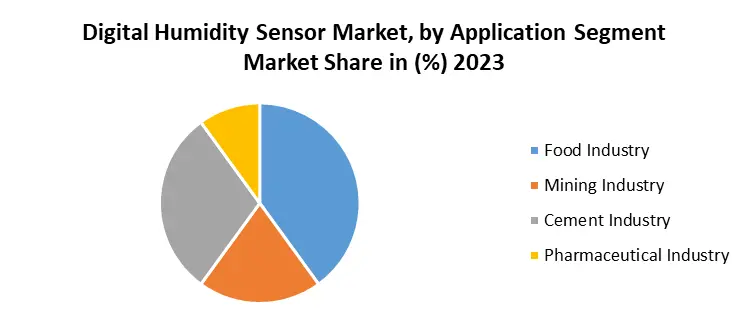
| by Application | Food Industry Mining Industry Cement Industry Pharmaceutical Industry |
||
| by Industry Vertical | Residential Commercial Automotive Industrial Agriculture Weather Station Healthcare Others |
||
Digital Humidity Sensor Market by Region:
North America (United States, Canada and Mexico)
Europe (UK, France, Germany, Italy, Spain, Sweden, Austria, Turkey, Russia and Rest of Europe)
Asia Pacific (China, India, Japan, South Korea, Australia, ASEAN and Rest of APAC)
Middle East and Africa (South Africa, GCC, Egypt, Nigeria and Rest of ME&A)
South America (Brazil, Argentina, Columbia and Rest of South America)
Digital Humidity Sensor Market, Key Players are
1. Honeywell International
2. Sensirion AG
3. STMicroelectronics
4. Texas Instruments
5. TE Connectivity
6. Bosch Sensortec
7. Omron Corporation
8. Vaisala
9. Amphenol
10. Sillicon Labs
11. ALPS
12. Invensense
13. Infineon Technologies
14. Robert Bosch
15. TDK
16. NXP Semiconductor
17. Continental AG
18. Murata
19. Delphi Automotive
20. Analog Devices
21. Panasonic
22. QTI Sensing Solutions
23. Sensata Technologies
FAQs:
1. What are the growth drivers for the Market?
Ans. Increasing demand for automation and growing awareness towards indoor air quality is expected to be the major driver for the Digital Humidity Sensor Market.
2. What is the major restraint for the Market growth?
Ans. The high costs, limited accuracy and complexity of installation regulations are expected to be the major restraining factor for the Digital Humidity Sensor Market growth.
3. Which region is expected to lead the global Digital Humidity Sensor Market during the forecast period?
Ans. Asia Pacific is expected to lead the global Digital Humidity Sensor Market during the forecast period, with a CAGR of 8.80%.
4. What is the projected market size & growth rate of the Digital Humidity Sensor Market?
Ans. The Digital Humidity Sensor Market size was valued at USD 5.20 Billion in 2023 and the total Digital Humidity Sensor revenue is expected to grow at a CAGR of 8.80% from 2024 to 2030, reaching nearly USD 9.27 Billion.
5. What segments are covered in the Digital Humidity Sensor Market report?
Ans. The segments covered in the Digital Humidity Sensor Market report are Type, Applications, Industry Vertical and Region.