CNC Machine Market by Offering, Product Type, End-User Industry and Region - Global Market Size Estimation, Industry-Wide Analysis, Competitive Landscape Assessment & Long-Term Forecast to 2034

8.7%
CAGR (2025-2034)
231.7 USD Bn.
Forecast Market Size
320
Report Pages
145
Market Tables

Overview

The CNC Machine Market size was valued at USD 109.36 Billion in 2025 and the total CNC Machine revenue is expected to grow at a CAGR of 8.7% from 2025 to 2034, reaching nearly USD 231.7 Billion by 2034.

CNC Machine Market Overview:

CNC (Computer Numerical Control) Machines use coded commands programmed precisely into a computer to automate machines that are normally operated manually. CNC machines perform machining tasks and are generally composed of milling, turning, cutting, or drilling tools. With the increasing demands placed upon the automotive, aerospace, electronics, healthcare, and metal fabrication industries to increase productivity, efficiency and precision, CNC Machines are experiencing growth in the market. The increase in CNC machines becoming more widely available in developed as well as developing countries, with examples of industrial automation trends emerging in pace with Industry 4.0. The North America region dominates the CNC Machine Market advanced manufacturing infrastructure, growing adoption of automation and Industry 4.0 technologies, strong presence of key market players, and demand from industries such as aerospace, automotive, and defences. Asia Pacific and Europe followed with significant consumption and production of CNC Machines.
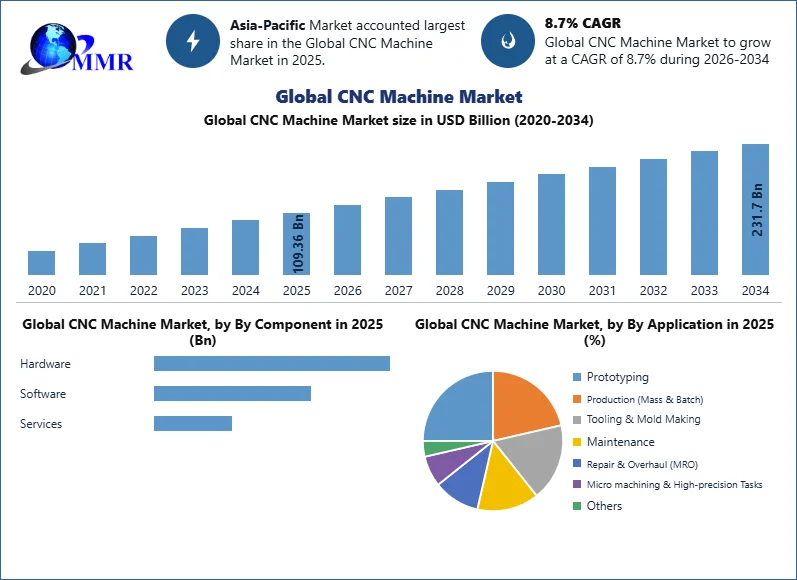
The global CNC Machine Market is experiencing robust growth, driven by the increasing adoption of precision manufacturing, industrial automation, and smart factory technologies across automotive, aerospace, electronics, healthcare, and industrial machinery sectors. The market is projected to grow from USD 109.36 billion in 2025 to USD 231.7 billion by 2034, registering a CAGR of 8.7% during the forecast period. Rising demand for high-precision and complex component manufacturing, coupled with advancements in multi-axis machining, CAD/CAM integration, AI-enabled automation, IoT-based monitoring, and predictive maintenance, is accelerating market expansion. Furthermore, growing investments in Industry 4.0, electric vehicle production, aerospace manufacturing, and digital manufacturing solutions are expected to create significant growth opportunities for CNC machine manufacturers worldwide.

To know about the Research Methodology :- Request Free Sample Report

CNC Machine Market Dynamics:

Increasing Demand for Precision and Automation Drives CNC Machine Adoption in Smart Manufacturing

CNC machines have a level of precision, complexity, and reproducibility compared to manual machining. For example, industries such as automotive, aerospace, and defence rely on CNC systems more to produce complex parts that have high tolerances. The advancement through high-level software systems such as CAD, CAM, and ERP systems improves production speed and accuracy and enables preventive and predictive maintenance. Many CNC machines operate with new features such as contour machining and automation, which again increases manufacturing flexibility.

Emerging Technologies and Industry Applications are a lucrative Opportunity for the CNC Machine Market

The use of IoT and machine learning technologies enables operators to monitor performance and receive alerts on mount performance, utilizing smartphones or PC's, greatly improving interaction with the operator and control of the operations. Mass production industries, particularly automotive, aerospace, military, and energy, are now using CNC systems to provide high-precision, standardized components. Furthermore, the power sector, which relies on customized parts and continuous operation, is more commonly using CNC machines to improve productivity and alter/reinforce failure rates.

Skill Gaps and High Costs to hamper CNC Machine Market Growth

A highly skilled workforce is required, including G-code, CAD/CAM software, and machinery troubleshooting capability. The high-level investment associated with modern CNC machinery, especially AI and IoT-enabled machines, proves to be a formidable barrier for SMEs. There continues to be limited opportunity for SMEs to consider CNC machinery in cost-sensitive markets, especially where overhead and markup margins are restricted.

Barriers to Adoption and Complexity in Maintenance Limit the CNC Machine Market Growth

The increase in complex maintenance requirements and potential for downtime due to software issues or mechanical problems hamper the CNC Machine Market growth. There is no adoption of CNC technologies in certain low-tech manufacturing areas of the developing world because of a lack of awareness, inadequate infrastructure, and continued reliance on traditional machining. These inhibiting factors represent limited utilization of CNC machine development and market utility within developing economies.

CNC Machine Market Segment Analysis:

By Type

The CNC Milling Machines segment held the largest share of the global CNC Machine Market in 2025 and is expected to maintain its dominance throughout the forecast period. The segment's growth is driven by its extensive use across automotive, aerospace, electronics, mold & die, and general manufacturing industries for producing complex and high-precision components. CNC milling machines offer superior accuracy, versatility, multi-axis machining capabilities, and high productivity, making them the preferred choice for a wide range of machining operations. Increasing adoption of automation, advanced CAD/CAM integration, and smart manufacturing technologies is further supporting the growth of the segment, while demand for CNC lathes, laser cutters, EDM, grinding, and turning centers continues to rise for specialized machining applications.


By Application

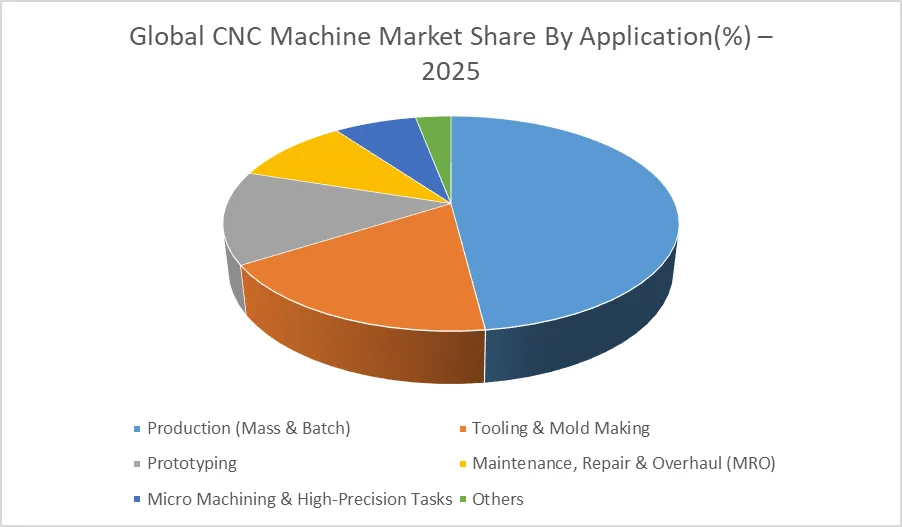
The Production (Mass & Batch) segment dominated the global CNC Machine Market in 2025 and is expected to maintain its leadership throughout the forecast period. The segment's growth is driven by increasing demand for high-volume, precision manufacturing across automotive, aerospace, electronics, medical devices, and industrial machinery industries. CNC machines enable consistent quality, faster production cycles, reduced material waste, and seamless automation, making them ideal for mass and batch production. Meanwhile, demand for prototyping, tooling & mold making, maintenance, repair & overhaul (MRO), and micro-machining applications continues to grow as manufacturers focus on product innovation, customization, and high-precision component manufacturing.
By Component

The Hardware segment dominated the global CNC Machine Market in 2025 and is expected to maintain its leadership throughout the forecast period. The segment's growth is driven by strong demand for high-performance controllers, drives, motors, HMI systems, and other core machine components that enable precision machining, higher productivity, and reliable automation. Increasing investments in advanced manufacturing, multi-axis CNC systems, and smart factory technologies are accelerating the adoption of high-performance hardware across automotive, aerospace, electronics, and industrial machinery industries. Meanwhile, demand for CAD/CAM software, CNC programming, simulation solutions, and installation, training, and maintenance services continues to grow as manufacturers focus on improving machine utilization, production efficiency, and digital manufacturing capabilities.

By End User

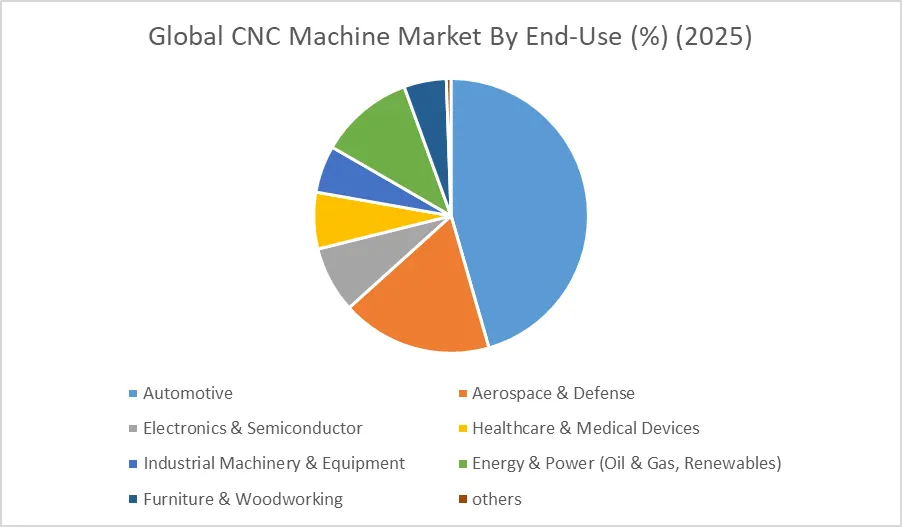
The Automotive segment dominated the global CNC Machine Market in 2025 and is expected to maintain its leadership throughout the forecast period. The segment's growth is driven by the increasing demand for precision manufacturing of engine components, transmission systems, chassis parts, battery housings, and electric vehicle (EV) components. CNC machines enable high-speed, high-accuracy, and repeatable production, making them essential for large-scale automotive manufacturing. Rising investments in vehicle electrification, lightweight materials, automation, and smart manufacturing are further accelerating CNC machine adoption. Meanwhile, demand from Aerospace & Defense, Electronics & Semiconductor, Healthcare & Medical Devices, Industrial Machinery & Equipment, Energy & Power, Furniture & Woodworking, and other manufacturing industries continues to grow as these sectors increasingly require complex, high-precision components and automated production capabilities.
By Price Range

The Mid-Range segment held the largest share of the global CNC Machine Market in 2025 and is expected to maintain its dominance during the forecast period. Its growth is driven by widespread adoption across automotive, aerospace, industrial machinery, and general manufacturing industries, offering an ideal balance of performance, precision, and cost. Meanwhile, entry-level machines remain popular among SMEs, while high-end/premium systems are increasingly adopted for advanced aerospace, medical, and semiconductor applications requiring ultra-high precision.

By Sales Channel

The Direct OEM Sales segment dominated the global CNC Machine Market in 2025 and is expected to maintain its leadership throughout the forecast period. The segment's growth is driven by increasing demand for customized CNC solutions, direct technical support, installation services, and long-term maintenance contracts offered by manufacturers. Direct sales also enable OEMs to build strong customer relationships and provide integrated automation and smart manufacturing solutions. Meanwhile, authorized distributors & system integrators continue to play a key role in expanding regional market reach, while online sales and e-commerce are gradually gaining traction for standard CNC machines and spare parts.

Regional Insights of CNC Machine Market:

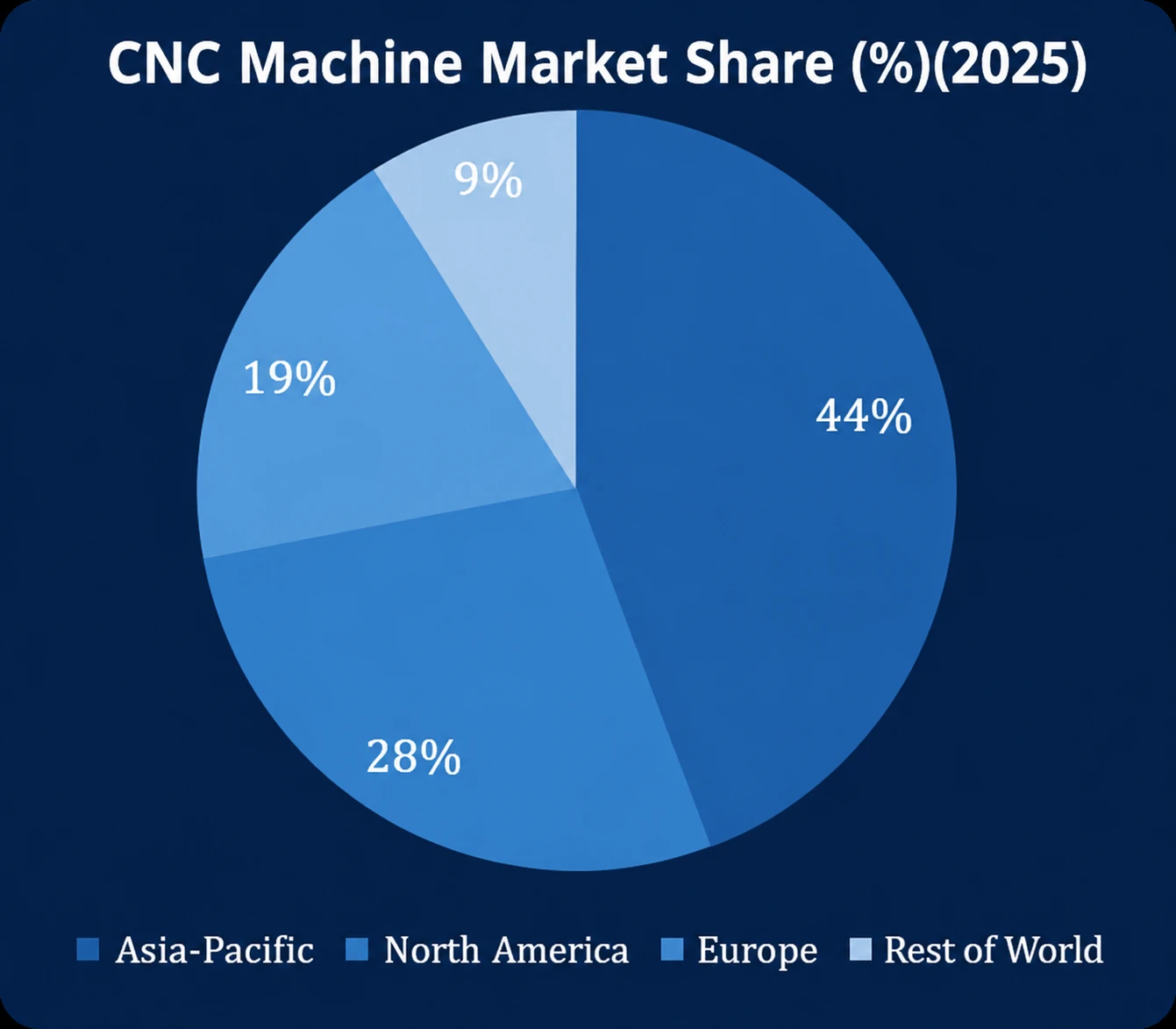
The Asia-Pacific region led the global CNC Machine Market in 2025 and is anticipated to remain dominant through the forecast period owing to rapid industrialization and increased manufacturing capabilities in addition to investments in smart factories in China, Japan, India, and South Korea. The growth of demand for CNC machine tools is being driven by high demand in automotive, electronics, industrial machinery, aerospace, and semiconductor industries, as well as industry 4.0 and automation.

North America accounts for the second largest market share due to high demand for CNC machines in the United States due to aerospace, defense, medical device, and advanced manufacturing applications. There is increasing investment by manufacturers in multi-axis CNC machines, digital manufacturing and AI-based automation.

Europe is one of the major markets with Germany, Italy and Switzerland accounting for high adoption rates of advanced CNC machines owing to its precision engineering and machine tool industry and focus on sustainable and energy efficient manufacturing as well as industry 4.0.

Latin America offers growing potential as Brazil and Mexico are seeing increasing investment in automotive manufacturing, metal fabrication, and industrial production. There is steady increase in demand for cost effective CNC systems and refurbished machines.

Market conditions in the Middle East & Africa market are gradually improving, as the region has seen a growth in the diversity of its industry due to increased investments in infrastructure, energy, mining and localized production from nations such as UAE, Saudi Arabia and South Africa.
Competitive Landscape of the CNC Machine Market:

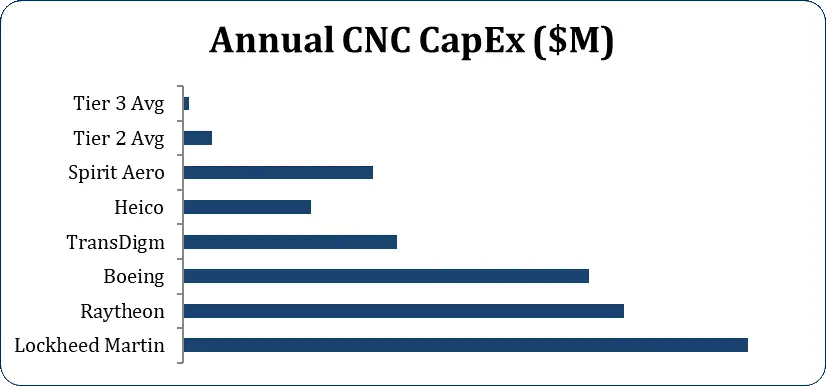
The global CNC Machine Market is highly competitive, with leading manufacturers such as DMG MORI, Yamazaki Mazak, Haas Automation, FANUC Corporation, Siemens AG, and Okuma Corporation dominating the market through broad product portfolios, global manufacturing footprints, and continuous investments in digital twin technology, IoT-enabled machining, AI-driven automation, and smart factory solutions. Demand from major aerospace and defense manufacturers, including Lockheed Martin, RTX Corporation (Raytheon), Boeing, TransDigm Group, HEICO Corporation, and Spirit AeroSystems, which continue to invest significantly in CNC machining capacity, is further accelerating the adoption of advanced multi-axis and automated machining systems. Asia-Pacific remains the largest manufacturing hub, led by China, Japan, and South Korea, while Europe and North America maintain strong positions through high-precision engineering and advanced industrial automation. Market participants are increasingly pursuing acquisitions, partnerships with robotics and software providers, expansion of regional manufacturing facilities, and development of intelligent CNC platforms to strengthen their competitive position. The report evaluates the CNC Machine Market based on market share, product innovation, technological capabilities, geographic presence, service networks, and automation expertise to assess the competitive strength of leading companies.
Recent key developments in the CNC Machine Market

• June 2025, USA – CloudNC (British US innovation) launched its AI-powered CAM Assist software in the U.S., automating up to 80% of CNC programming tasks to overcome the machinist labor shortage and dramatically reduce setup times.
• May 2025, North America (Mexico/USA) – Accelerated nearshoring led U.S. and Mexican manufacturing firms to install 2,600 twin spindle lathes in Q1 2024 to support EV plant production across the U.S.–Mexico corridor.
• March 2025, Europe – Germany’s commitment to energy efficiency under the Green Deal spurred 480 retrofit projects, upgrading 2,150 legacy CNC machines with regenerative servo drives that save ~0.9 kWh per deceleration.

Key trends in the CNC Machine market

1. Adoption of 5-Axis and Multi-Axis CNC Machines
• Manufacturers are increasingly adopting 5-axis CNC machines for complex and high-precision parts in aerospace, defense, and automotive industries.
• Example: The market for 5-axis CNC machines is expected to grow at a CAGR of 7.3% from 2024 to 2030, due to demand for advanced milling and drilling operations.
2. Integration of Industrial IoT (IIoT) and Automation
• The use of smart CNC machines integrated with sensors, real-time monitoring, and remote diagnostics is on the rise.
• Example: Over 40% of new CNC machines sold in 2024 were equipped with IoT-enabled interfaces to optimize predictive maintenance and machine utilization.
3. Rise in Demand from EV and Aerospace Sectors
• The growing production of electric vehicles (EVs) and aircraft components is driving demand for precision machining.
• Example: CNC machine deployment in the automotive sector rose by 22% in 2023, largely due to the surge in EV battery casing and motor housing production.

CNC Machine Market Scope: Inquire before buying


CNC Machine Market
Report Coverage Details
Base Year: 2025 Forecast Period: 2026-2032
Historical Data: 2020 to 2025 Market Size in 2025: USD 109.36 Bn.
Forecast Period 2026 to 2032 CAGR: 8.7% Market Size in 2032: USD 196.1 Bn.
Segments Covered: By Application Prototyping
Production (Mass & Batch)
Tooling & Mold Making
Maintenance, Repair & Overhaul (MRO)
Micro machining & High-precision Tasks
Others
by Product Type Milling Machines
Machining Centers
Lathe Machines
Laser Machines
Drilling Machines
Grinding Machines
Electrical Discharge Machines
Others
by Price Range Entry-Level
Mid-Range
High-End / Premium
by Component Hardware
Controllers
Drives
Motors
HMI
Others
Software
CAD/CAM
CNC Programming
Simulation
Services
Installation
Training
Maintenance
by End-User Industry Automotive & Transportation
Aerospace & Defense
Medical & Healthcare
Semiconductor & Electronics
Capital Goods / Industrial Machinery
Energy & Power
Oil & Gas
Others
By Sales Channel Direct OEM Sales
Authorized Distributors & System Integrators
Online Sales & E-commerce
Others

CNC Machine Market, by Region

North America (United States, Canada, and Mexico)
Europe (UK, France, Germany, Italy, Spain, Sweden, Austria, and the Rest of Europe)
Asia Pacific (China, South Korea, Japan, India, Australia, ASEAN, Indonesia, Philippines, Malaysia, Vietnam, Thailand, ASEAN, Rest of Asia Pacific)
Middle East & Africa (South Africa, GCC, Nigeria, Rest of ME&A)
South America (Brazil, Argentina, Rest of South America)

Leading Manufacturers in the CNC Machine Market are:

  1. DMG MORI
  2. Siemens
  3. FANUC Corporation
  4. Haas Automation, Inc.
  5. Mitsubishi Electric Corporation
  6. Okuma Corporation
  7. Yaskawa Electric Corporation
  8. KUKA AG
  9. Hurco Companies, Inc.
  10. EMCO GmbH
  11. Fagor Automation
  12. HEIDENHAIN GmbH
  13. JTEKT Corporation
  14. Yamazaki Mazak Corporation
  15. Makino Milling Machine Co., Ltd.
  16. GSK CNC Equipment Co., Ltd.
  17. Bosch Rexroth AG
  18. Schneider Electric SE
  19. NUM AG
  20. Beckhoff Automation GmbH & Co. KG
  21. TRUMPF Group
  22. Dalian Machine Tool Group (DMTG)
  23. Hyundai WIA Corporation
  24. Brother Industries, Ltd.
  25. Fair Friend Group (FFG)
  26. DN Solutions
  27. Hardinge Inc.
  28. Tornos Group AG
  29. Soft Servo Systems, Inc.
  30. Sandvik AB
  31. Amada Co., Ltd.
  32. GF Machining Solutions
  33. EMAG Group
  34. CHIRON Group
  35. Sodick Co., Ltd.
  36. Others

CAD/CAM Modeling, CNC Programming & Digital Manufacturing Providers

  1. Autodesk, Inc.
  2. Dassault Systèmes SE
  3. Siemens Digital Industries Software
  4. PTC Inc.
  5. Hexagon AB
  6. CNC Software LLC (Mastercam)
  7. SolidCAM Ltd.
  8. OPEN MIND Technologies AG
  9. Cimatron Ltd.
  10. BobCAD-CAM, Inc.
  11. ANSYS, Inc.
  12. Altair Engineering Inc.
  13. Bentley Systems, Incorporated
  14. MecSoft Corporation
  15. SprutCAM Tech Ltd.

FAQ’S:

1) What was the CNC Machine Market size in 2025?
Answer: The CNC Machine Market was valued at 109.36 billion in 2025.

2) Which product segment is dominating the CNC Machine Market?
Answer: The Lathe machine segment is dominating the market due to the increasing use of multiaxis tooling in the mechanism by various end users.

3) What are the key players in the CNC Machine Market?
Answer: FANUC Corporation, Amada Machine Tools Co. Ltd., Yamazaki Mazak Corporation, JTEKT Corporation, Trumpf, Schuler AG, Hyundai WIA, Mitsubishi Heavy Industries Machine Tools Ltd., Makino, MAG IAS GmbH, KOMATSU Ltd., XYZ Machine Tools, ANCA Group, Okuma Corporation, SIEMENS, HAAS Automation, DMG MORI

4) Which factor acts as the driving factor for the growth of the CNC Machine Market?
Answer: Advantages of CNC machines, including increased precision, speed, and flexibility, as well as features such as contour machining, which permits cutting of contoured forms, including those protruding from the surface, are the factors driving the market growth.

5) What factors are restraining the growth of the CNC Machine Market?
Answer: The high cost of maintenance for CNC machines and robots is a restraining factor hampering the market growth.

Table of Contents

1. Executive Market Landscape and Industry Overview 1.1 Global Computer Numerical Controls (CNC) Market Size (Value USD Billion & Volume 000’Units), 2025–2034 1.2 Market Definition, Scope, and Segmentation Analysis 1.3 Industry Ecosystem Analysis: OEMs, CAD/CAM Providers, Automation Vendors & End Users 1.4 Evolution of CNC Systems: Conventional to Industry 4.0-Enabled Smart Manufacturing Platforms 1.5 Market Structure Analysis: Global Tier-1 Players vs Regional CNC Manufacturers 1.6 Investment Outlook Driven by Industrial Automation, Precision Manufacturing & Smart Factories 1.7 Competitive Intensity and Strategic Positioning of CNC, CAD/CAM & Automation Providers 1.8 Innovation Trends in Multi-Axis Machining, CAD/CAM Integration & Intelligent Manufacturing 1.9 Technological Advancements in CNC Controllers, Digital Manufacturing & Manufacturing Processes 2. Global Computer Numerical Controls Market Dynamics 2.1 Market Trends 2.2 DROC Analysis 2.3 Drivers 2.4 Restraints 2.5 Opportunities 2.6 Challenges 2.7 PORTER’s Five Forces Analysis 2.8 Supplier power 2.9 Buyer power 2.10 Threat of substitutes 2.11 Threat of new entrants 2.12 Competitive rivalry 2.13 PESTLE Analysis 3. Sheet Metal Manufacturing Process Optimization & Automation Intelligence 3.1 AI-Assisted Nesting & Material Utilization Optimization Analysis 3.2 Automated CNC Laser Cutting, Punching & Robotic Bending Integration Trends 3.3 Toolpath Optimization & Tooling Worktime Efficiency Benchmarking 3.4 Digital Twin, MES & Predictive Maintenance Adoption in Sheet Metal Manufacturing 3.5 Smart Factory Workflow Automation & Lights-Out Fabrication Capability Analysis 4. DFM, Tooling Constraints & Special-Case Manufacturing Scenario Analysis 4.1 Design for Manufacturability (DFM) Benchmarking for Precision Sheet Metal Components 4.2 Bend Radius, Springback & Tolerance Management Complexity Assessment 4.3 Tooling Standardization, Automatic Tool Changer (ATC) & Setup Time Reduction Analysis 4.4 Manufacturing Limitations in High-Strength, Ultra-Thin & Multi-Material Sheet Processing 4.5 Special-Case Production Scenarios in Aerospace, EV Battery & Semiconductor Fabrication 5. Market Demand Intelligence & Consumption Analysis 2025 5.1 Installed base evolution of CNC systems across key manufacturing industries (units) 5.2 Annual consumption rate vs replacement demand cycle analysis (machine lifecycle assessment) 5.3 CNC machine utilization benchmarking across precision manufacturing sectors (%) 5.4 Capacity expansion trends in smart manufacturing facilities and production lines 5.5 Demand elasticity analysis under industrial automation investment cycles 5.6 Backlog-to-demand ratio analysis across CNC OEMs and industrial buyers 5.7 Demand concentration analysis across aerospace, automotive, electronics, and medical sectors 6. Production Economics & Cost Structure Benchmarking 6.1 Cost structure breakdown of CNC systems (hardware, controllers, CAD/CAM software, integration, servicing %) 6.2 Regional manufacturing cost differential analysis (North America vs Europe vs Asia-Pacific) 6.3 Impact of automation and digital integration on per-unit production cost reduction (%) 6.4 Raw material and semiconductor price sensitivity impact on CNC pricing 6.5 Labor productivity vs CNC operational efficiency benchmarking 6.6 Economies of scale analysis among Tier-1 CNC manufacturers 6.7 Cost pass-through capability under inflationary manufacturing environments 7. Pricing Dynamics & Value-Based Pricing Analysis 2025 7.1 Historical pricing trend analysis of CNC systems (2020–2025) 7.2 Price variation analysis by machine type and automation complexity (%) 7.3 Premium pricing analysis for aerospace-grade and ultra-precision CNC systems 7.4 Price elasticity across SMEs vs large-scale industrial manufacturers 7.5 Subscription-based manufacturing software vs capital equipment purchasing trends 7.6 Regional ASP benchmarking across developed and emerging markets 7.7 Service contracts, software licensing, and lifecycle pricing contribution analysis 8. CAD/CAM Modeling & Digital Manufacturing Intelligence 8.1 CAD/CAM software adoption trends across CNC manufacturing facilities 8.2 Integration of CAD/CAM platforms with CNC machining workflows 8.3 Growth in simulation-driven manufacturing and virtual machining validation 8.4 AI-assisted toolpath optimization and automated programming trends 8.5 Digital twin integration in CNC machining operations 8.6 Cloud-based CAD/CAM collaboration adoption across industrial ecosystems 8.7 Real-time machining simulation and production optimization capabilities 8.8 Impact of CAD/CAM integration on machining precision and production efficiency 8.9 CNC programming software ecosystem analysis 8.10 Manufacturing execution system (MES) integration with CNC operations 9. Manufacturing Process Intelligence & Precision Engineering Analysis 9.1 CNC milling process demand analysis 9.2 CNC turning and multi-axis machining adoption trends 9.3 Grinding and ultra-precision finishing process benchmarking 9.4 EDM and high-complexity component manufacturing analysis 9.5 Laser and plasma cutting process evolution in industrial manufacturing 9.6 Hybrid manufacturing (additive + subtractive machining) adoption trends 9.7 Multi-surface and complex geometry machining demand analysis 9.8 Single-setup machining efficiency benchmarking 9.9 Process automation impact on machining tolerance and defect reduction 9.10 Smart manufacturing workflow integration across machining processes 10. Industry-Wise Adoption Deep Dive 10.1 Aerospace & defense CNC adoption intensity index 10.2 Automotive precision machining penetration analysis 10.3 Medical device manufacturing dependency on CNC systems 10.4 Electronics & semiconductor precision machining demand 10.5 Industrial machinery and heavy equipment machining trends 10.6 Energy & power sector CNC deployment analysis 10.7 Mold, die & tooling manufacturing evolution 10.8 Cross-industry CNC adoption maturity benchmarking 11. Regional Demand Intelligence 11.1 CNC Market Demand Analysis By Region 11.2 North America smart manufacturing adoption analysis 11.3 Europe Industry 4.0 CNC integration trends 11.4 Asia-Pacific manufacturing dominance assessment 11.5 China CNC production ecosystem competitiveness 11.6 Japan precision engineering and automation leadership analysis 11.7 India industrial automation and CNC demand outlook 11.8 Emerging markets manufacturing expansion trends 11.9 Regional industrial policy impact assessment 12. Demand Acceleration from Complex Geometry Manufacturing 12.1 Growth in complex component production demand across industries (%) 12.2 Share of multi-axis CNC systems in high-complexity manufacturing (%) 12.3 Increase in multi-surface machining requirements in advanced manufacturing 12.4 Industry migration from conventional machining to multi-axis CNC systems 12.5 Correlation between product design complexity and CNC system requirements 12.6 OEM production shift toward low-volume high-precision manufacturing 12.7 Impact of digital product design and CAD/CAM integration on machining complexity 13. Customer Buying Behavior & Procurement Intelligence 13.1 Key purchase decision criteria (precision, automation, software compatibility, service support) 13.2 Industrial buyer journey mapping and procurement evaluation process 13.3 ROI and payback period analysis influencing CNC investments 13.4 Influence of customization and application-specific machining requirements 13.5 Vendor selection criteria and switching behavior analysis 13.6 Impact of leasing, financing, and subscription models on CNC procurement 13.7 Post-purchase satisfaction and repeat investment drivers 14. Manufacturing Precision & Engineering Efficiency Transformation 14.1 Precision improvement achieved through advanced CNC machining (%) 14.2 Reduction in production steps through integrated machining workflows 14.3 Cycle time compression in complex part manufacturing 14.4 Scrap rate reduction benchmarking across precision engineering industries 14.5 Productivity uplift through single-setup machining capability 14.6 Cost-per-part comparison vs conventional machining systems 14.7 Engineering tolerance improvement across aerospace and medical applications 15. Technology Advancement & Automation Intelligence 15.1 CNC control system evolution: conventional vs AI-enabled machining 15.2 Digital twin adoption in CNC operations (%) 15.3 Predictive maintenance penetration and downtime reduction impact 15.4 Smart factory integration level with Industry 4.0 ecosystems 15.5 Edge computing and real-time machining optimization capabilities 15.6 Motion control precision improvement trends (micron-level benchmarking) 15.7 Cyber-physical manufacturing integration impact on machining efficiency 16. Automation & Smart Manufacturing Integration 16.1 Automation penetration across CNC-enabled facilities 16.2 Human-machine collaboration models in smart manufacturing 16.3 Lights-out manufacturing adoption trends 16.4 Robotics integration with CNC machining systems 16.5 Real-time monitoring and IoT-enabled machining analysis 16.6 Smart factory readiness benchmarking 16.7 Productivity improvement through automation integration (%) 17. Service, Maintenance & Lifecycle Economics 17.1 CNC machine lifecycle cost structure analysis 17.2 Predictive maintenance adoption impact assessment 17.3 Spare parts and servicing economics 17.4 Downtime cost benchmarking across industries 17.5 Service contract penetration analysis 17.6 Remote diagnostics and monitoring adoption trends 17.7 Lifecycle extension strategies among industrial users 18. Industrial Investment & Capital Expenditure Analysis 18.1 CAPEX allocation toward advanced CNC systems 18.2 Industry-wise investment intensity in CNC automation (%) 18.3 ROI benchmarking across manufacturing verticals 18.4 Payback period analysis by industrial application 18.5 Upgrade vs greenfield installation investment split 18.6 Smart factory investment linkage with CNC deployment 18.7 Government incentives and industrial modernization support analysis 19. Trade Flow & Global Supply Dynamics 2025 19.1 Import-export flow analysis of CNC systems 19.2 Top importing countries and market share benchmarking 19.3 Top exporting countries and key OEM competitiveness analysis 19.4 Trade policy, tariff, and export restriction impact assessment 19.5 Regional trade dependency analysis 19.6 Tariff impact on machine pricing and procurement 19.7 Cross-border OEM supply network mapping 19.8 Distribution channel and industrial logistics efficiency analysis 20. Supply Chain Resilience & Manufacturing Ecosystem Analysis 20.1 Global supply chain mapping for CNC components and controllers 20.2 Semiconductor and electronics dependency risk assessment 20.3 Lead time variability benchmarking across OEMs 20.4 Supplier concentration risk analysis in precision manufacturing components 20.5 Nearshoring vs offshoring production shift assessment 20.6 Inventory optimization strategies among CNC manufacturers 20.7 Geopolitical and logistics disruption sensitivity analysis 21. End-to-End Value Chain Analysis 21.1 Raw material supplier ecosystem analysis 21.2 Component manufacturer ecosystem mapping 21.3 CNC OEM manufacturing ecosystem analysis 21.4 Distribution, integration, and reseller ecosystem analysis 21.5 End-user industry ecosystem benchmarking 21.6 CAD/CAM software and CNC control ecosystem analysis 21.7 Value capture and profit pool analysis across the value chain 22. Sustainability & Energy Efficiency Analysis 22.1 Energy consumption benchmarking per machining operation 22.2 Carbon footprint analysis of CNC manufacturing operations 22.3 Green manufacturing adoption trends across CNC facilities 22.4 Energy-efficient CNC machine design innovations 22.5 Circular economy practices in machine lifecycle management 22.6 ESG compliance impact on industrial procurement strategies 22.7 Sustainable manufacturing transition impact assessment 23. Regulatory & Industrial Policy Impact 23.1 Industrial automation policy analysis by region 23.2 Defense and aerospace procurement regulation impact 23.3 Export control restrictions on advanced CNC systems 23.4 Environmental compliance impact on manufacturing operations 23.5 Industrial safety and certification requirements analysis 23.6 Government incentives for smart manufacturing investments 23.7 Localization and domestic manufacturing policy impact on OEM strategies 24. Global Computer Numerical Controls Market : Market size and Forecast by Segmentation (by Value USD Billion and Volume in 000'Units) (2025-2034) 24.1 Global Computer Numerical Controls Market Size and Forecast, By Type 24.1.1 CNC Milling Machines 24.1.2 CNC Lathes 24.1.3 CNC Routers 24.1.4 CNC Plasma Cutters 24.1.5 CNC Laser Cutters 24.1.6 CNC Wire EDM 24.1.7 CNC Grinding Machines 24.1.8 CNC Boring and Drilling Machines 24.1.9 CNC Turning Centers & Machining Centers 24.1.10 Others 24.2 Global Computer Numerical Controls Market Size and Forecast, By Component 24.2.1 Hardware 24.2.1.1 Controllers 24.2.1.2 Drives 24.2.1.3 Motors 24.2.1.4 HMI 24.2.1.5 Others 24.2.2 Software 24.2.2.1 CAD/CAM 24.2.2.2 CNC Programming 24.2.2.3 Simulation 24.2.3 Services 24.2.3.1 Installation 24.2.3.2 Training 24.2.3.3 Maintenance 24.3 Global Computer Numerical Controls Market Size and Forecast, By Price Range 24.3.1 Entry-Level 24.3.2 Mid-Range 24.3.3 High-End / Premium 24.4 Global Computer Numerical Controls Market Size and Forecast, By Application 24.4.1 Prototyping 24.4.2 Production (Mass & Batch) 24.4.3 Tooling & Mold Making 24.4.4 Maintenance, Repair & Overhaul (MRO) 24.4.5 Micro machining & High-precision Tasks 24.4.6 Others 24.5 Global Computer Numerical Controls Market Size and Forecast, By End-User 24.5.1 Automotive 24.5.2 Aerospace & Defense 24.5.3 Electronics & Semiconductor 24.5.4 Healthcare & Medical Devices 24.5.5 Industrial Machinery & Equipment 24.5.6 Energy & Power (Oil & Gas, Renewables) 24.5.7 Furniture & Woodworking 24.5.8 Others 24.6 Global Computer Numerical Controls Market Size and Forecast, By Sales Channel 24.6.1 Direct OEM Sales 24.6.2 Authorized Distributors & System Integrators 24.6.3 Online Sales & E-commerce 24.6.4 Others 24.6.4.1 (Note: Segment-wise market size figures for all region will follow the same structure in the final report.) 25. Competitive Landscape 25.1 MMR Competition Matrix 25.2 Competitive Positioning of Leading Key Players [Revenue and Market Share (%)] 25.3 Key Players Benchmarking 25.3.1 Company Name 25.3.2 Headquarter 25.3.3 Business Segment 25.3.4 Revenue (2025) 25.3.5 Employee Count 25.3.6 Segment Revenue (2025) 25.3.7 R&D Investment (%) 25.3.8 Growth Rate in (%) 25.4 Profit Margin (%) 25.5 Market Share (%) 25.5.1 Production Capacity (000’Units) 25.5.2 Technology Adoption 25.5.3 Patent 25.5.4 Customer Engagement Metrics 25.5.5 Price Competitiveness 25.5.6 Carbon Footprint Disclosure 25.5.7 Certifications 25.5.8 ESG / sustainability policies 25.5.9 Geographical Presence 25.6 Market Structure 25.6.1 Market Leaders 25.6.1.1 Market Followers 25.6.1.2 Emerging Players 25.6.1.3 Mergers and Acquisitions Details 25.6.1.4 Recent Key Developments 25.6.1.5 Competitive Intelligence & Strategic Analysis Report 26. Global Competitive Overview 26.1 Presence of global CNC OEMs, automation leaders, and CAD/CAM software providers 26.2 Regional competition trends: Asia-Pacific manufacturing dominance vs premium Western engineering markets 26.3 Competitive drivers: precision capability, automation integration, software ecosystem, and service support 26.4 Competition shift toward Industry 4.0-enabled and AI-integrated CNC systems 27. Manufacturing Infrastructure & Production Capability Analysis 27.1 Global CNC manufacturing capacity and production footprint by region 27.2 Manufacturing automation levels and smart factory integration benchmarking 27.3 Component sourcing ecosystem (controllers, servo drives, semiconductors, motion systems) 27.4 Regional production hubs and cost competitiveness analysis 28. Product & Application Positioning Analysis 28.1 Machine type positioning (milling, turning, grinding, EDM, laser cutting, machining centers) 28.2 End-use industry positioning (automotive, aerospace, electronics, medical, industrial machinery) 28.3 Product differentiation based on precision, speed, automation, and multi-axis capability 28.4 Positioning of smart CNC systems, hybrid manufacturing, and CAD/CAM-integrated solutions 29. Strategic Moves & Industry Alliances 29.1 Capacity expansion and advanced manufacturing facility investments 29.2 Mergers, acquisitions, and strategic technology partnerships 29.3 Collaborations between CNC OEMs and CAD/CAM software providers 29.4 Smart manufacturing and Industry 4.0 ecosystem partnerships 30. Distribution & Channel Strategy Analysis 30.1 Direct OEM industrial sales models 30.2 Distributor, dealer, and system integrator network analysis 30.3 Industrial automation and turnkey manufacturing solution partnerships 30.4 Digital sales platforms and remote configuration capabilities 31. Competitive Intelligence & Strategic Positioning Analysis 31.1 Market share benchmarking across global CNC manufacturers 31.2 Production capacity and geographic presence comparison 31.3 Business model differentiation (integrated OEMs vs niche precision manufacturers vs automation specialists) 31.4 Strategic positioning (cost leadership vs precision engineering vs smart manufacturing innovation) 31.5 Pricing strategy benchmarking across standard, premium, and aerospace-grade systems 32. Competitive Advantage & Differentiation Drivers 32.1 Precision engineering and machining capability leadership 32.2 CAD/CAM integration and digital manufacturing ecosystem strength 32.3 Automation, AI, and Industry 4.0 integration capability 32.4 Global servicing network and aftermarket support strength 32.5 Entry barriers driven by technological complexity and capital intensity 33. Product Benchmarking & Performance Analysis 33.1 Precision benchmarking across CNC system categories 33.2 Machine speed, cycle time, and productivity comparison 33.3 Multi-axis machining capability benchmarking 33.4 Energy efficiency and smart monitoring performance analysis 33.5 CAD/CAM compatibility and software integration benchmarking 33.6 B34. Competitive Strategy & Differentiation Blueprint 33.7 Competitive intensity and strategic positioning gap assessment 33.8 Differentiation mapping (cost vs precision vs automation vs digital integration) 33.9 Capability benchmarking across global CNC OEMs and software providers 33.10 Strategic opportunities in AI-enabled machining, hybrid manufacturing, and smart factories 35. Company Profile: Key Players 35.1 Detailed Profile considering the parameters: 35.2 Overview 35.3 Business Portfolio 35.4 Financial Overview 35.5 Group Size (Large, Medium, or Small as per industry convention) 35.6 Total Production (000'Units) 35.7 CNC Business Revenue (USD, latest fiscal year) 35.8 Revenue Growth Rate (3-year CAGR) 35.9 Geographic Footprint (No. of regions/countries served) 35.10 Installed Base (Estimated machines/controllers in field) 35.11 Market Penetration (Share in key end-markets/regions) 35.12 Product Portfolio Breadth (Types: milling, turning, laser, EDM, etc.) 35.13 Controller Technology Maturity (e.g., multi-axis, open CNC, IoT readiness) 35.14 Software Ecosystem (CAD/CAM integration, proprietary vs. open) 35.15 Innovation Intensity (R&D spend %/new launches per year) 35.16 Strategic Partnerships (Robotics, automation, integrators) 35.17 Aftermarket & Services Mix (% of revenue) 35.18 Pricing Positioning (Value, mid-market, premium) 35.19 Lead Times & Delivery Performance 35.20 Supply Chain Resilience (Dual sourcing, in-house key components) 35.21 Quality & Reliability KPIs (MTBF, warranty claims rate) 35.22 Customer Satisfaction/NPS (enterprise buyers) 35.23 Sustainability Metrics (energy efficiency features, certifications) 35.24 Geographic Presence (number of countries/regions served) 35.25 SWOT Analysis 35.26 Strategic Analysis 35.27 Recent Developments 35.2 CNC Machines, Controls & Industrial Automation Providers 35.2.1 DMG MORI 35.2.2 Siemens 35.2.3 FANUC Corporation 35.2.4 Haas Automation, Inc. 35.2.5 Mitsubishi Electric Corporation 35.2.6 Okuma Corporation 35.2.7 Yaskawa Electric Corporation 35.2.8 KUKA AG 35.2.9 Hurco Companies, Inc. 35.2.10 EMCO GmbH 35.2.11 Fagor Automation 35.2.12 HEIDENHAIN GmbH 35.2.13 JTEKT Corporation 35.2.14 Yamazaki Mazak Corporation 35.2.15 Makino Milling Machine Co., Ltd. 35.2.16 GSK CNC Equipment Co., Ltd. 35.2.17 Bosch Rexroth AG 35.2.18 Schneider Electric SE 35.2.19 NUM AG 35.2.20 Beckhoff Automation GmbH & Co. KG 35.2.21 TRUMPF Group 35.2.22 Dalian Machine Tool Group (DMTG) 35.2.23 Hyundai WIA Corporation 35.2.24 Brother Industries, Ltd. 35.2.25 Fair Friend Group (FFG) 35.2.26 DN Solutions 35.2.27 Hardinge Inc. 35.2.28 Tornos Group AG 35.2.29 Soft Servo Systems, Inc. 35.2.30 Sandvik AB 35.2.31 Amada Co., Ltd. 35.2.32 GF Machining Solutions 35.2.33 EMAG Group 35.2.34 CHIRON Group 35.2.35 Sodick Co., Ltd. 35.3 CAD/CAM Modeling, CNC Programming & Digital Manufacturing Providers 35.3.1 Autodesk, Inc. 35.3.2 Dassault Systèmes SE 35.3.3 Siemens Digital Industries Software 35.3.4 PTC Inc. 35.3.5 Hexagon AB 35.3.6 CNC Software LLC (Mastercam) 35.3.7 SolidCAM Ltd. 35.3.8 OPEN MIND Technologies AG 35.3.9 Cimatron Ltd. 35.3.10 BobCAD-CAM, Inc. 35.3.11 ANSYS, Inc. 35.3.12 Altair Engineering Inc. 35.3.13 Bentley Systems, Incorporated 35.3.14 MecSoft Corporation 35.3.15 SprutCAM Tech Ltd. 35.3.15.1 Others 36. Revenue Pool Mapping & Value Hotspots 36.1 Revenue split by machine type, software, controllers, and services 36.2 Regional revenue distribution across North America, Europe, Asia-Pacific, MEA, and South America 36.3 End-use industry revenue contribution analysis 36.4 High-margin segments including aerospace-grade machining and smart manufacturing systems 37. Impact of Macro Drivers & Industry Trends on Market Expansion 37.1 Industrial automation and Industry 4.0 adoption growth 37.2 Rising demand for precision manufacturing across industries 37.3 Expansion of electric vehicles, aerospace, semiconductor, and medical device production 37.4 Smart factory and digital manufacturing transformation trends 37.5 Government manufacturing modernization initiatives and localization policies 38. Value-Led vs Volume-Led Competitive Strategy 38.1 Low-cost standard CNC systems vs premium multi-axis smart machining systems 38.2 Volume-driven industrial supply vs margin-focused high-precision applications 38.3 Global automation leaders vs regional low-cost CNC manufacturers 38.4 Scale-driven production vs innovation-led differentiation strategies 39. Portfolio Prioritization & Product Mix Strategy 39.1 Focus on high-demand milling and machining center systems 39.2 Expansion of AI-enabled and IoT-connected CNC platforms 39.3 Development of hybrid manufacturing and digital twin-enabled systems 39.4 Product differentiation through precision, automation, and software integration 39.5 Customization strategies for aerospace, automotive, and medical industries 40. Regional Expansion & Market Entry Roadmap 40.1 Asia-Pacific as the global CNC manufacturing hub 40.2 North America and Europe driven by advanced automation adoption 40.3 India and Southeast Asia as emerging industrial automation markets 40.4 Localization strategies and regional production expansion analysis 40.5 Distribution and industrial partnership expansion roadmap 41. Pricing & Margin Sustainability Strategy 41.1 Raw material and semiconductor-linked pricing dynamics 41.2 Margin differences across standard vs high-end precision systems 41.3 Regional pricing and industrial affordability analysis 41.4 Cost optimization through automation and scale manufacturing 41.5 Lifecycle servicing and software revenue contribution analysis 42. Technology, Innovation & Product Development Strategy 42.1 AI-enabled machining and adaptive control system development 42.2 CAD/CAM integration and digital manufacturing innovation trends 42.3 Advancements in multi-axis machining and hybrid manufacturing systems 42.4 Predictive maintenance and digital twin technology evolution 42.5 Smart factory and autonomous machining technology roadmap 43. Customer Engagement & Long-Term Industrial Contracting Models 43.1 Strategic contracts with aerospace, automotive, and electronics manufacturers 43.2 Partnerships with industrial automation and smart factory integrators 43.3 Distributor and industrial dealer engagement strategies 43.4 Long-term maintenance and lifecycle servicing agreements 43.5 Customer retention through precision performance and uptime reliability 44. Supply Chain & Operational Efficiency Strategy 44.1 Semiconductor, controller, and servo component sourcing strategies 44.2 Manufacturing efficiency and production automation optimization 44.3 Inventory and demand planning for industrial machinery supply 44.4 Logistics and global distribution network optimization 44.5 Supply chain risk mitigation and supplier diversification strategies 45. Business Model & Value Proposition Canvas 45.1 Core value proposition: precision, automation, efficiency, and digital integration 45.2 Revenue streams: machine sales, software licensing, servicing, and automation integration 45.3 Key partners: CAD/CAM vendors, automation providers, distributors, and industrial OEMs 45.4 Cost structure: manufacturing, electronics, software integration, logistics, and servicing 45.5 Target industries: aerospace, automotive, electronics, medical, industrial machinery 45.6 Smart manufacturing and precision engineering as competitive differentiators 46. Risk & Downside Scenario Analysis (2026–2034) 46.1 Semiconductor shortages and supply chain disruptions 46.2 High capital investment barriers among SMEs 46.3 Pricing pressure from regional low-cost manufacturers 46.4 Cybersecurity risks in connected manufacturing ecosystems 46.5 Demand sensitivity to industrial slowdown and capital expenditure cycles 47. Investment & Expansion Strategy 47.1 Investment in smart manufacturing and AI-enabled CNC platforms 47.2 Expansion of multi-axis machining and automation capabilities 47.3 Partnerships with CAD/CAM and industrial software providers 47.4 Geographic expansion into emerging industrial economies 47.5 Scaling through digital manufacturing and operational efficiency 48. 7-Year Strategic Outlook (2026–2034) 48.1 Growth driven by Industry 4.0 and precision manufacturing expansion 48.2 Rising adoption of AI-enabled and cloud-connected CNC systems 48.3 Increasing penetration across aerospace, EV, semiconductor, and medical industries 48.4 Expansion of hybrid manufacturing and autonomous machining technologies 48.5 Market consolidation and software-driven competitive differentiation 48.6 Automation and digital manufacturing shaping long-term industry evolution 49. Key Findings 50. Strategic Moves & Industry Outlook 51. Research Methodology 52. Whitespace Analysis + Business Model Canvas 52.1 Market Gaps Identification 52.2 Value Proposition Development 52.3 Revenue Streams Analysis 52.4 Cost Structure Evaluation 52.5 Key Partnerships Exploration 52.6 Customer Segmentation 52.7 Channels to Market 54. Marketing and Positioning Recommendations 54.1 Branding Strategies 54.2 Product USPs 54.3 Target Audience Identification 54.4 Communication Strategies 54.5 Digital Marketing Approaches 55. Distribution Plan 55.1 Urban Retail Strategies 55.2 Rural NGO Tie-Ups 55.3 E-commerce Integration 55.4 Logistics and Supply Chain Management 56. Channel & Pricing Gaps 56.1 Underserved Routes 56.2 Pricing Bands Analysis 4.3 Competitor Pricing Strategies 57. Unmet Demand & Latent Needs 57.1 Category Gaps 57.2 Consumer Segments Analysis 57.3 Emerging Trends Identification 58. Customer Relationship 58.1 Loyalty Programs 58.2 After-sales Service 58.3 Customer Feedback Mechanisms 59. Value Proposition 59.1 Sustainability Initiatives 59.2 Integrated Supply Chains 59.3 Competitive Advantages 60. Entry Strategy Evaluation 60.1 Domestic Market Entry Strategy 60.2 Product Mix Considerations 60.3 Pricing Band Strategy 60.4 Packaging Solutions 60.5 Export Entry Strategy 60.6 Target Countries 60.7 Compliance Roadmap 61. Profitability Outlook 61.1 Breakeven Analysis 61.2 Long-term Sustainability Strategies 62. Execution Roadmap 62.1 Phased Plan for Market Entry 62.2 Market Setup 62.3 Market Entry 62.4 Growth Acceleration 62.5 Scale & Stabilize 62.6 Key Activities and Milestones 62.7 Milestone Planning 62.8 Activity Tracking

Custom Market Research Services

We Will Customise The Research For You, In Case The Report Listed Above Does Not Meet With Your Requirements